プロの技術を支える「ヒカリ」という道具|CRAFTED WITH PROFESSIONALS
2026.10.22
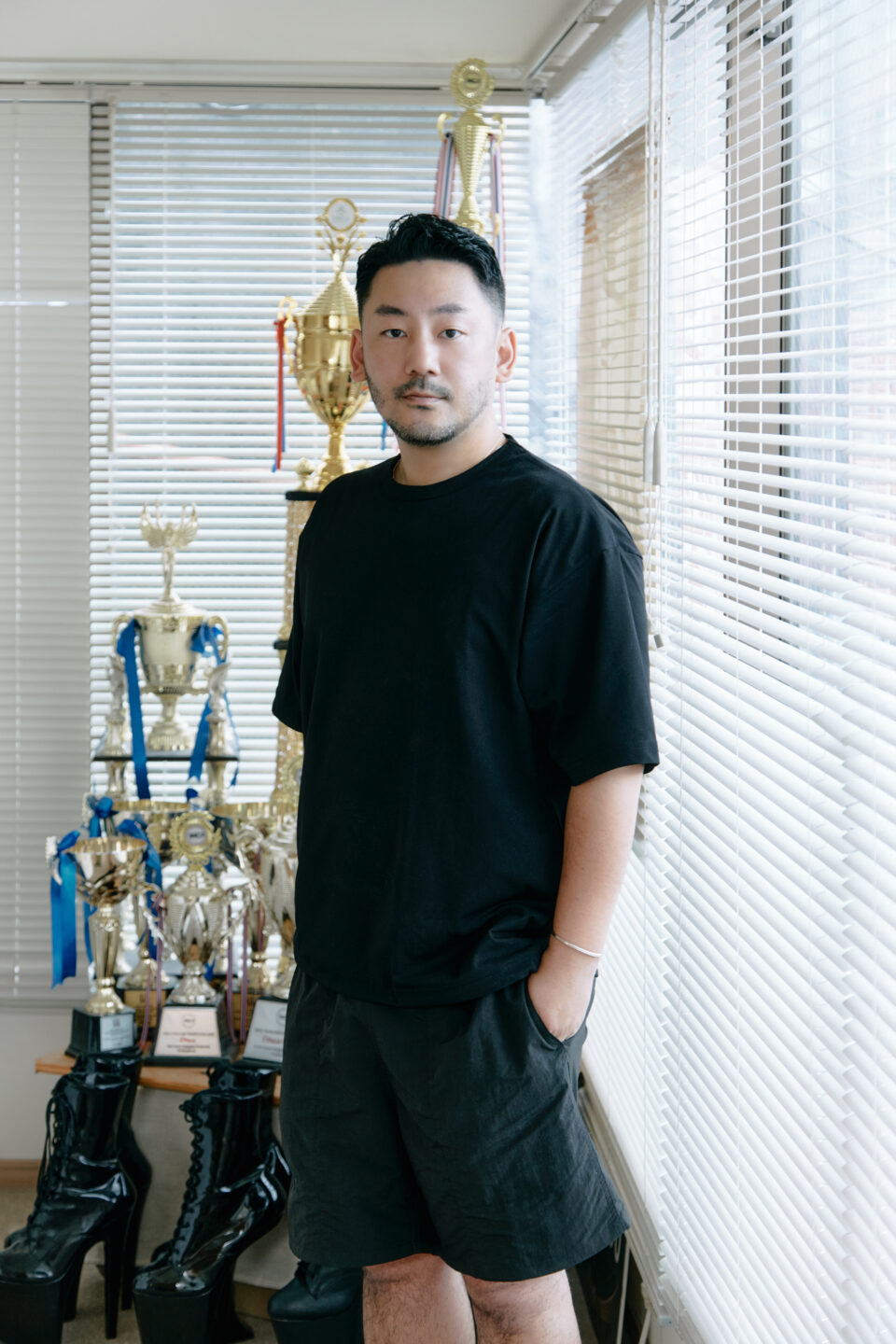
使う人の声を聞き、職人の技術で道具へと落とし込む。そんな独自のものづくりを約60年続けてきた株式会社ヒカリ。シザーからキューティクルニッパーまで、現社長・高橋伸一氏に、ヒカリの哲学とこだわり、世界へ向けたこれからを聞いた。
For nearly 60 years, HIKARI has pursued a distinctive approach to craftsmanship: listening closely to professionals that use its tools and translating their needs into products. From scissors to cuticle nippers, we spoke with President Shinichi Takahashi about the philosophy behind HIKARI’s craftsmanship, its uncompromising attention to detail, and the company’s vision for the global future.
日本のネイルケア黎明期とともに生まれた、国産ニッパー
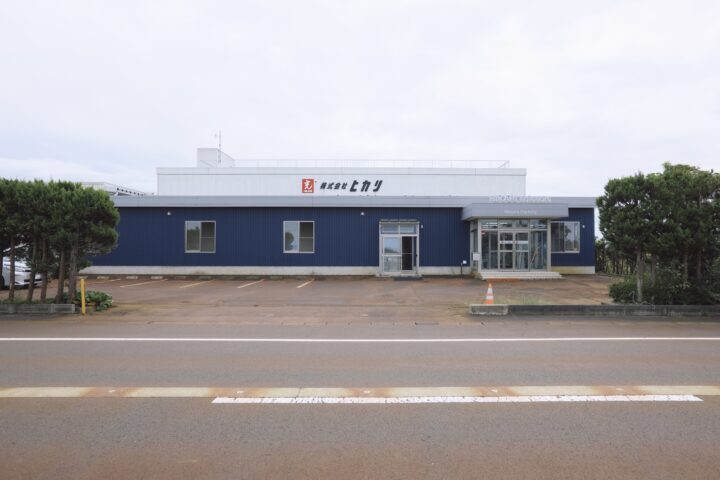
1967年創業の株式会社ヒカリ。美容・理容業界ではシザー、ネイル業界ではキューティクルニッパーのメーカーとして、長年プロの手元を支えてきた。創業者は、高橋社長の祖父にあたるヘアスタイリスト。新潟で複数のサロンを経営していたが、大きな地震で店を失い東京へ。当時、自らシザーを研ぐ美容師や理容師も多く、そこで培った研磨技術をもとにハサミメーカーを立ち上げた。ヒカリのものづくりの原点には、最初から「使う人」がいる。現場で本当に必要とされる道具をつくる。その姿勢は、高橋社長の父、そして約10年間ヘアスタイリストとして現場に立った高橋社長自身へと受け継がれてきた。“技術者が、技術者のために道具をつくる”それがヒカリの文化だ。
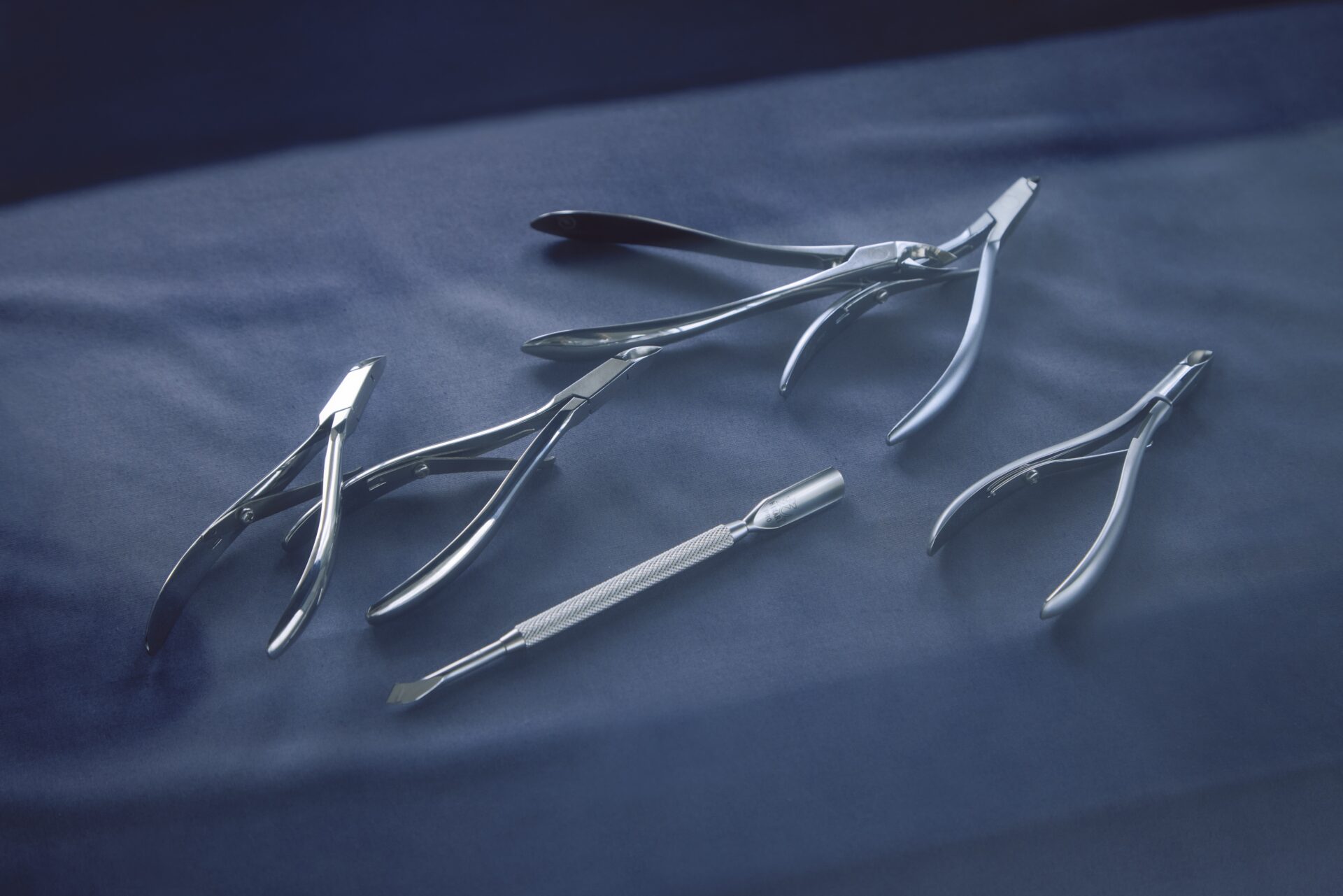
ヒカリがネイル用ニッパーの製造を始めたのは、およそ40年前。当時、日本では現在のようなキューティクルニッパーを使ったネイルケアは、まだ一般的ではなかった。海外を視察した美容業界関係者が、現地で使われていたニッパーを日本へ持ち帰り、ヒカリの研磨技術で「もっときれいに切れるようにできないか」と相談したことが始まりだったという。やがて海外製品を研ぐだけではなく、日本で一から作ろうと国産キューティクルニッパーの開発がスタートした。
当時は、ネイルケアのセオリーも道具の正解もまだ確立されていない時代。ヒカリは日本のネイル黎明期を支えたネイリストと職人を直接つなぎ、ネイルケアを知らない職人には実際にスクールへ通ってもらい、何を、どの角度で、どう切る道具なのかから学んでもらったという。刃先は何ミリがいいのか。どの角度なら皮膚に入りやすいのか。どこまで細くすれば操作しやすく、どこから危険になるのか。職人自身がケアを理解したうえで製品をつくる。ヒカリのニッパーの歴史は、日本のネイルケアの歴史の一部でもある。
MADE IN JAPAN: CUTICLE NIPPERS BORN AT THE DAWN OF JAPANESE NAIL CARE
Founded in 1967, HIKARI has long supported beauty professionals, making scissors for hairdressers and barbers and cuticle nippers for nail technicians. It was founded by the grandfather of current President Shinichi Takahashi, a hairstylist who ran salons in Niigata. After a major earthquake, he moved to Tokyo and used his polishing skills to start a scissors manufacturer. HIKARI’s craftsmanship begins with the person using the tool. This philosophy passed to Takahashi’s father and then to Takahashi, a hairstylist for about ten years, making HIKARI a company of professionals creating tools for professionals.
Around 40 years ago, when cuticle care was still uncommon in Japan, someone from the beauty industry brought back trimmers from overseas and asked whether HIKARI’s polishing could improve them. This grew into developing cuticle nippers in Japan. With no established principles or ideal tool, HIKARI sent artisans to nail schools to learn what the tool needed to cut, at what angle, and how. Its craftspeople learned the techniques first, then translated that knowledge into the tool, so HIKARI’s history is also part of nail care’s history in Japan.
「切れればいい」ではない。数ミリに宿る設計思想
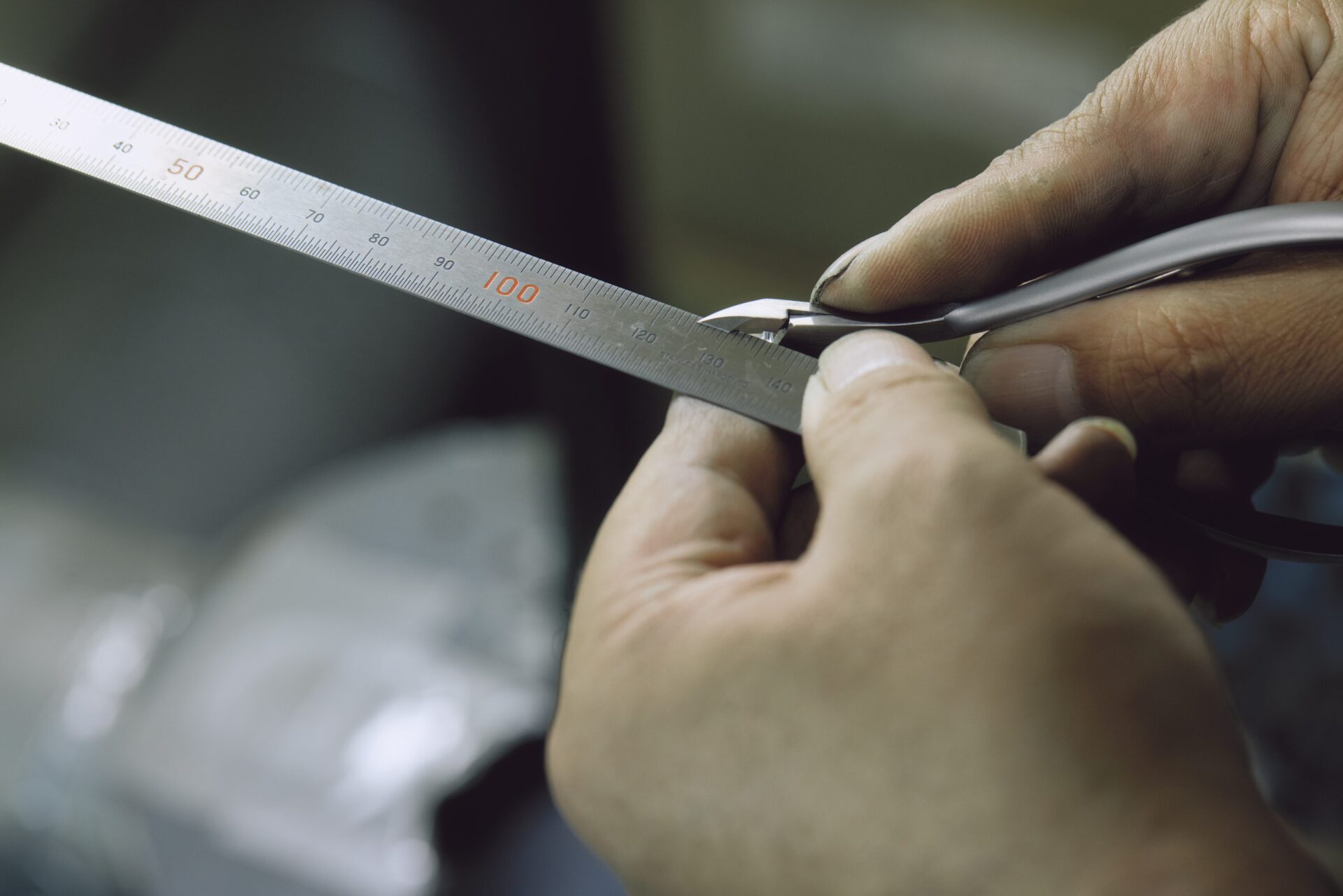
ヒカリには、5mm、4mm、3.5mm、3mmと刃長の異なるモデルがある。刃が短いほど細かな操作が可能になる一方、製造にも使用にも高い精度が必要だ。かつては5mmから始まり、職人の技術向上とともに4mm、3mmへと進化してきた。だからこそ、ヒカリは上級者向けだけを作らない。初心者向けの『NEW ニッパー』から、繊細な操作を求めるプロ向けの『Tiaraシリーズ』『PROシリーズ』『Tiara by felicia』『Swan』まで、技術段階に合ったモデルを揃える。“高価=誰にとっても良い”ではなく、使い手に合うことが重要なのだ。「ネイリストの技術を引き上げるニッパーを作りたい」という考えが、その根底にある。
ヒカリのこだわりの多くは、“言われなければ気づかない場所”にある。象徴的なのがニッパーのジョイント部分だ。一般的な製品では上下2つのパーツを接合する構造が多いが、ヒカリでは中央のパーツを上下から挟み込むような「三枚刃」構造を採用している。理由は、長期間使用したときのガタつきを抑えるため。ニッパーは毎日何度も開閉され、接合部が摩耗すれば、ほんのわずかなズレが刃先の精度に影響する。そこで、長く安定した開閉を維持できる構造を採用している。さらに鏡面加工まで施すため工程も増える。それでもヒカリにとって重要なのは、何年使ったあとも道具としての精度を維持できること。そこまで含めて一本のニッパーなのである。
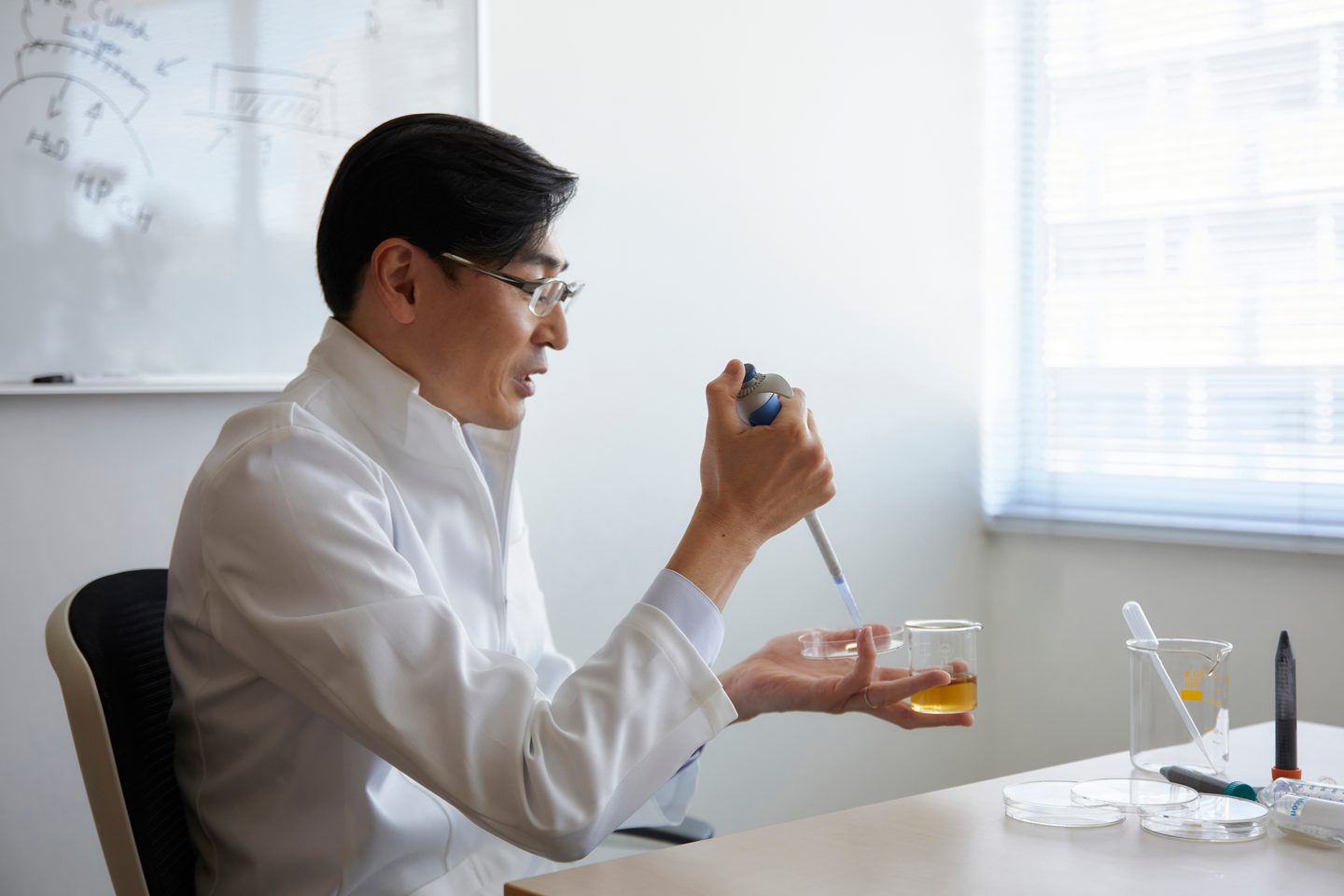
ヒカリの商品開発では、製品の良いところだけを聞くのではない。むしろプロに「何が嫌か」を聞く。長年販売されてきた『PROシリーズ』でも、「角が肌に当たると痛い」「もっと刃先を細く」「もっと薄く」といった声が集まった。その要望を反映して生まれたのが、さらに進化した『Tiaraシリーズ』だ。角を丸くし、手への当たりを柔らかくする。さらにバネとグリップが擦れる部分に樹脂を組み込み、ステンレス同士の摩擦を抑える。これはもともと高級シザーに使われていた技術で、滑らかな開閉を長く保つためのものだ。シザーで培った技術をそのまま転用するのではなく、ネイルの道具に合わせて再設計する。興味深いのは、店頭で説明だけを聞くとPROシリーズを選ぶ人が多い一方、展示会などで実際に触ってもらうとTiaraシリーズを選ぶ人が増えるということ。スペックだけでは伝わらない、“手でわかる違い”があるのだ。
ネイルケアのチャンピオン、小笠原友紀子さん監修の『Tiara by felicia』には、さらに細かな加工が施されている。そのひとつがマット仕上げだ。まず表面を鏡のようになるまで磨き、そのあと再びブラスト加工を施してマットにする。一見すると遠回りな工程だが、一度表面を徹底的に整えてから細かなマット加工を加えることで、より繊細な質感となり、手汗による滑りも抑えやすくなる。「滑る」という声に対し、単に滑り止めを付けるのではなく、素材や加工そのものから解決策を探る。“職人泣かせ”と表現されるほど工程は増えるが、一つの不満を解決するためにそこまで追求するのがヒカリだ。
MORE THAN JUST A CLEAN CUT: THE DESIGN PHILOSOPHY IN EVERY MILLIMETRE
HIKARI offers trimmers with 5mm, 4mm, 3.5mm and 3mm blades. Shorter blades allow greater precision but demand more from both maker and user. The range began at 5mm and moved to 4mm and then 3mm as HIKARI’s craftspeople improved. The line-up isn’t limited to experts, running from the beginner-friendly NEW Nipper to models for delicate work, including the Tiara Series, PRO Series, Tiara by felicia and Swan. A higher price doesn’t necessarily mean a better tool; what matters is matching the user’s skill level and needs, with the ambition of helping elevate technique.
Many of HIKARI’s most distinctive details go unnoticed, the joint being one example. Where many trimmers join an upper and lower component, HIKARI uses a three-layer structure, with a central component held between two outer pieces. The aim is durability: as daily use wears a joint, even slight movement can affect precision, and this design minimises looseness so movement stays smooth and stable for years. Mirror polishing adds further complexity, but HIKARI treats long-term reliability as part of the product itself.
Development is shaped by what professionals dislike, too. Feedback on the long-established PRO Series, such as sore corners against the skin and requests for a finer tip and thinner blade, led to the more refined Tiara Series. The corners were rounded, and resin was added where the spring and grip touch to reduce friction. This technique, originally from HIKARI’s high-end scissors, was re-engineered for how trimmers are used. Customer responses are revealing too. Shop explanations tend to lead people to the PRO Series, but at exhibitions, where they can hold the tools, more choose the Tiara Series. Specifications can’t convey the difference; you feel it in your hand.
The Tiara by felicia, developed with nail-care champion Yukiko Ogasawara, features intricate finishing. Its matte surface is made by polishing the metal to a mirror finish, then blasting it, giving a delicate texture that reduces slippage from perspiration. Rather than adding an anti-slip feature, HIKARI solves such complaints through material and finishing. The demanding process challenges even its craftspeople, but that commitment defines HIKARI.
「買って終わり」ではない。研磨から始まる二度目のものづくり
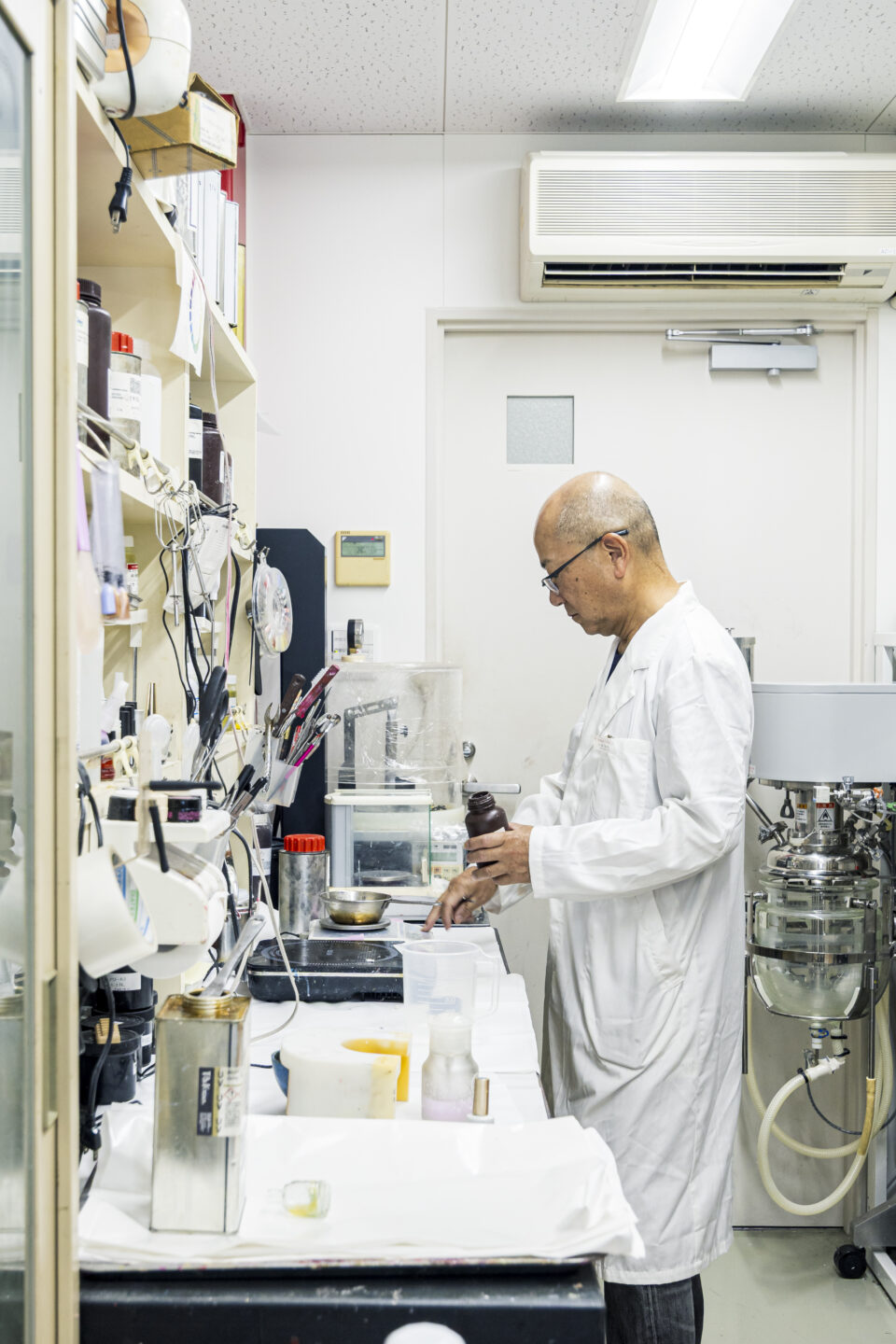
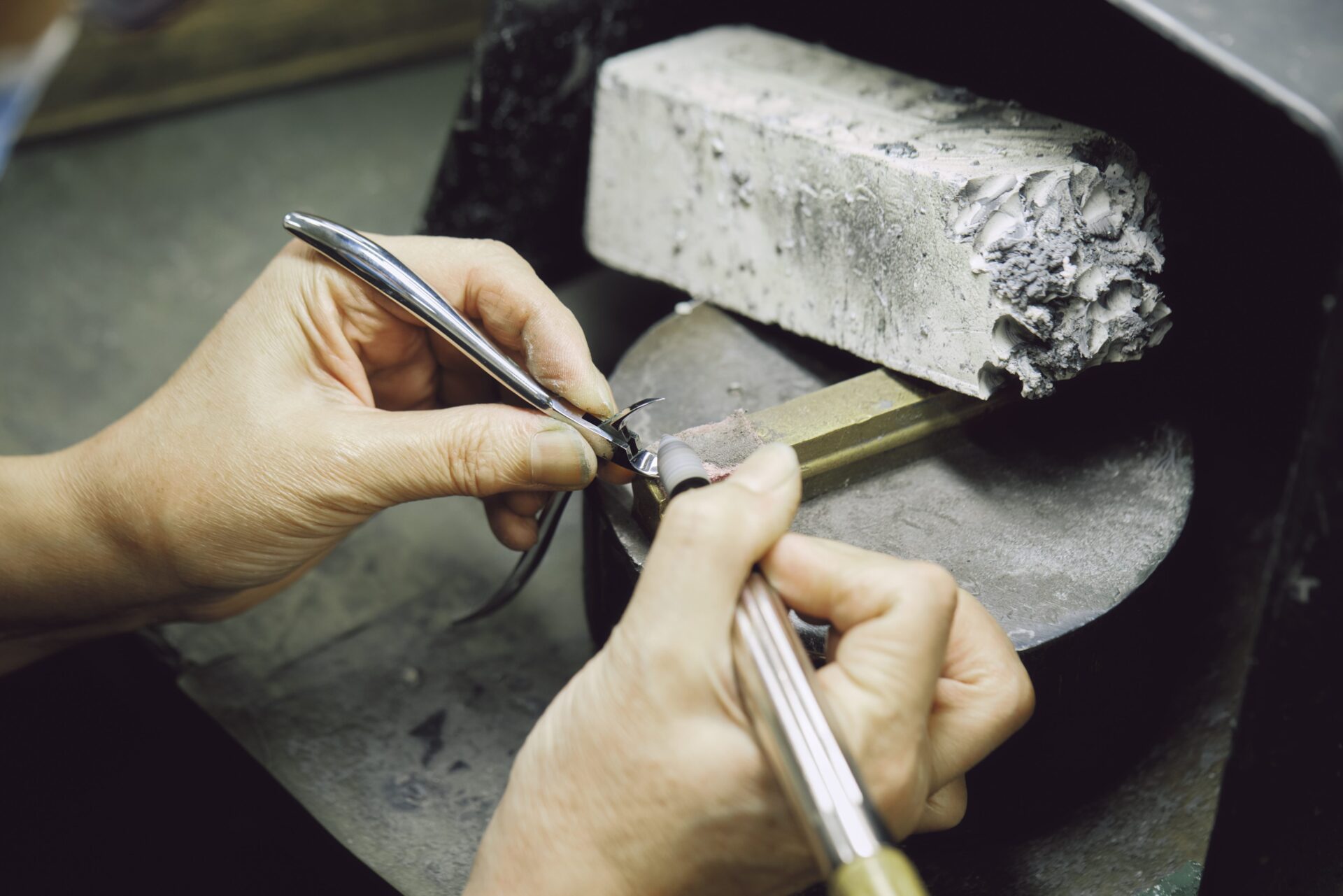
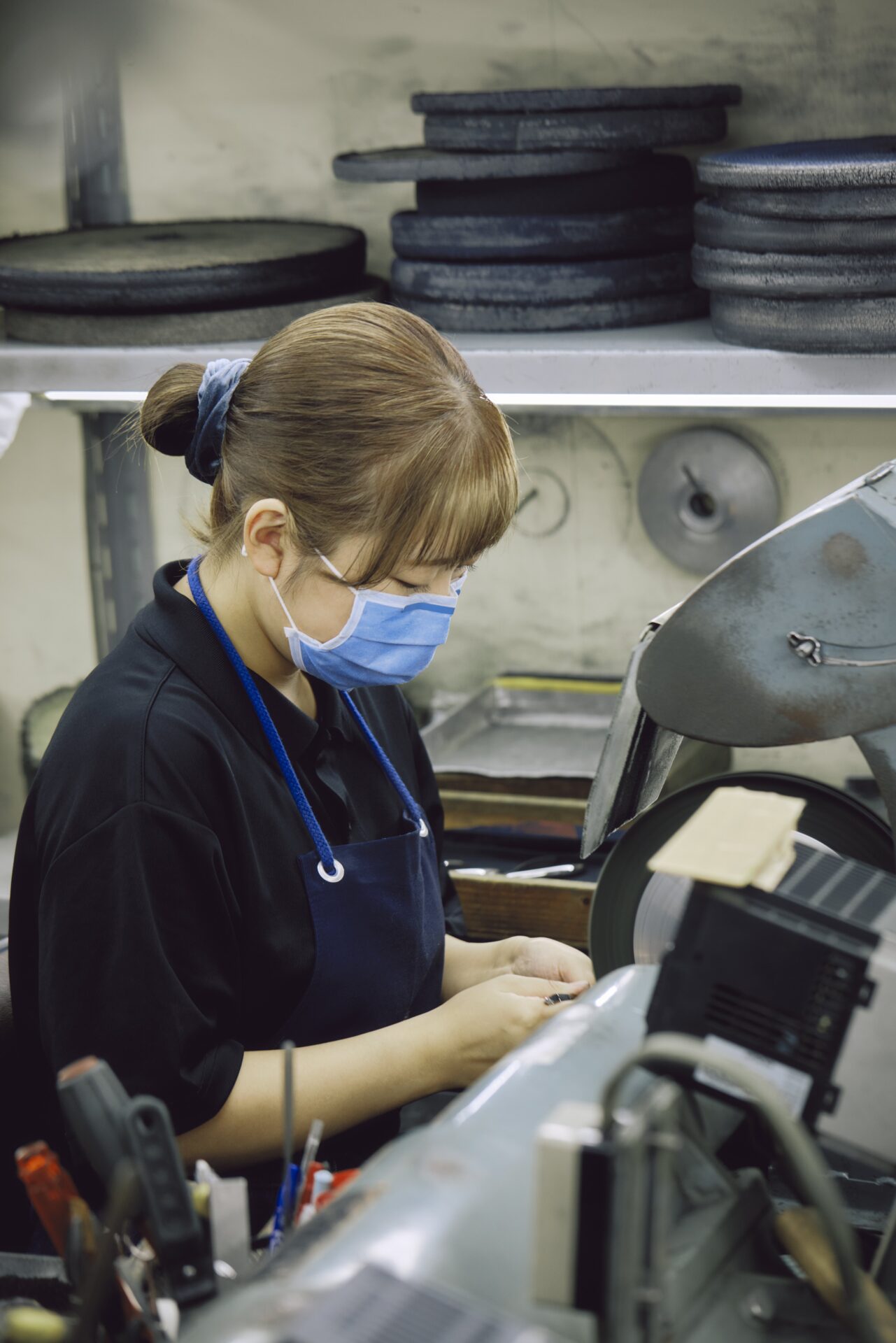
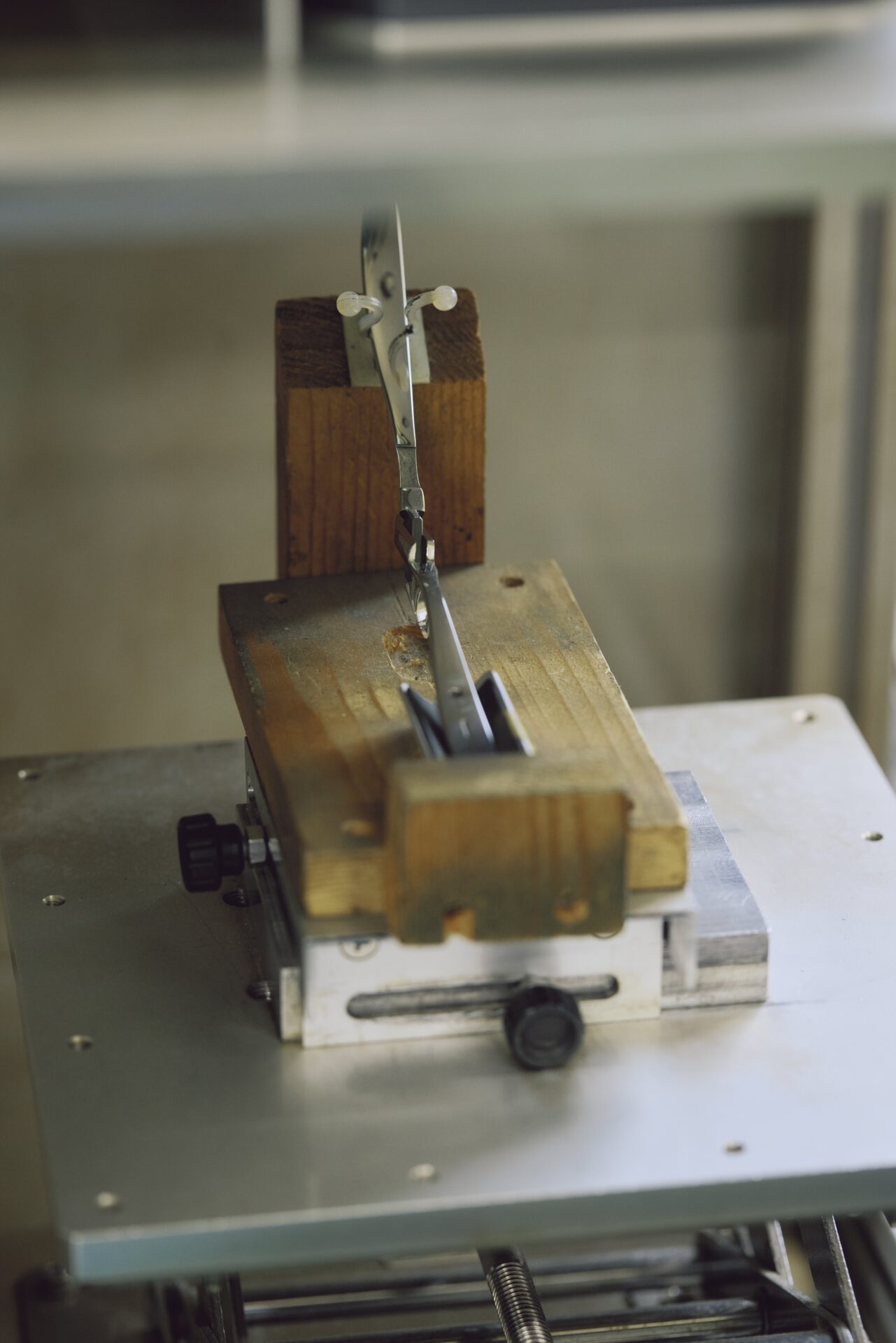
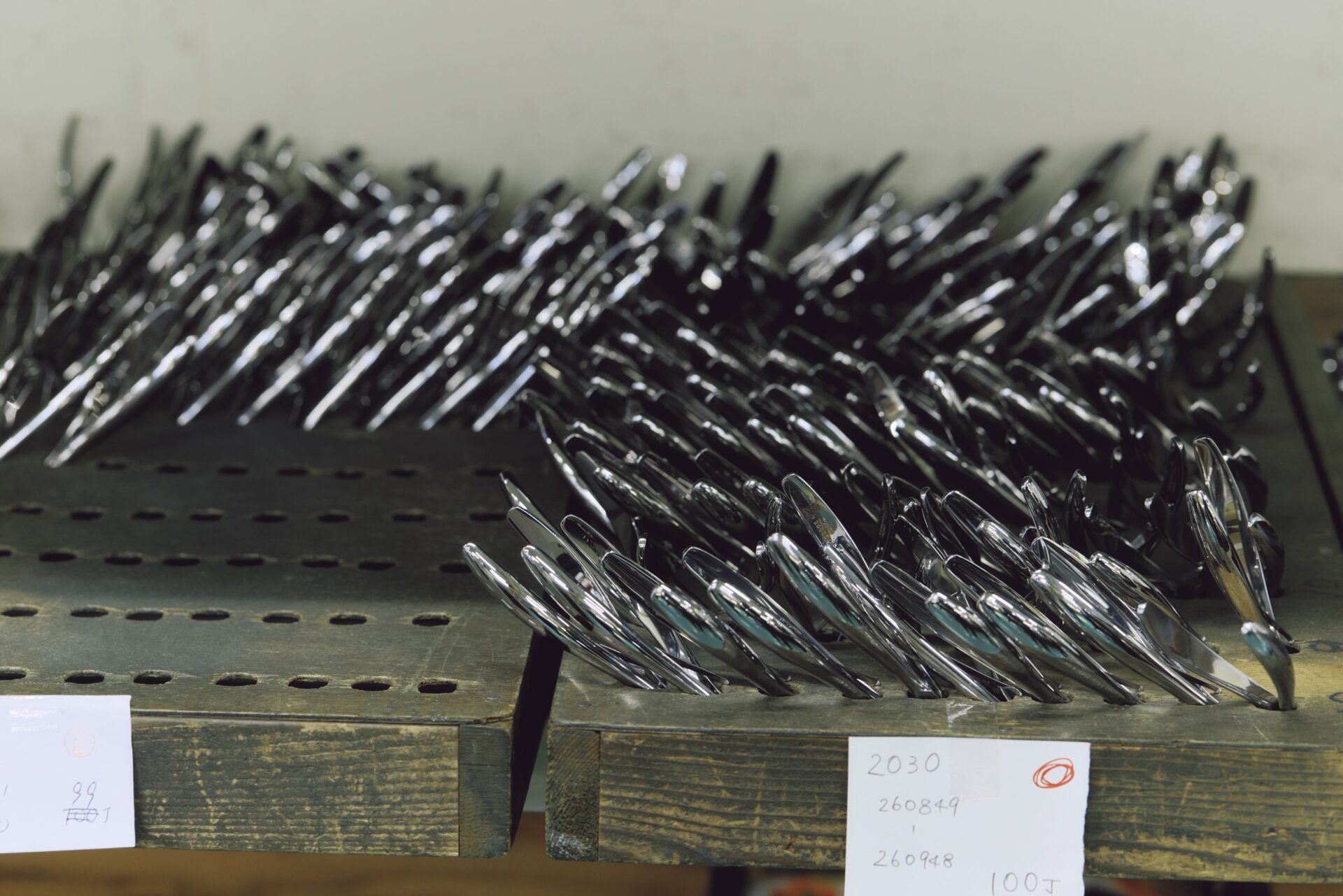
ヒカリを語るうえで、製造と同じくらい重要なのが研磨だ。キューティクルニッパーは刃物である以上、使えば少しずつ摩耗する。ヒカリでは定期的な研磨・点検を推奨しているが、それは単に切れ味を戻す作業ではない。刃を研げば少しずつ短くなり、バネの位置関係などほかの部分にも影響が出る。そのため職人は刃先だけでなく、必要に応じてバネ周辺まで調整し、できるだけ長く使える状態へ戻していく。他社では3回程度の研磨が目安とされているが、ヒカリなら状態によって約5回程度まで対応できる場合があるという。さらに、長年使ったニッパーには、その人の力加減や癖が刻まれている。だから何でも新品同様に戻せばいいわけではない。その人の手に馴染んだ感覚を残しながら、必要な部分だけを整える。「もう少し使えるようにしてあげたい」そんな思いで職人が一本ずつ手を入れる。そして、ヒカリのニッパーには、一本ずつシリアルナンバーが付けられていることをご存じだろうか。番号を調べれば、いつ製造されたのか、どこへ出荷されたのかを確認でき、研磨や修理を行えばその履歴も管理されている。一丁一丁が管理されたプロフェッショナルツール。使って、研いで、調整して、また使う。その時間までメーカーが見守っている。売ったあとまで責任を持つ。それもまた、ヒカリのものづくりの一部である。
IT DOESN’T END WITH THE PURCHASE: A SECOND ACT OF CRAFTSMANSHIP IS IN THE SHARPENING
For HIKARI, sharpening matters as much as manufacturing. Cuticle nippers are cutting tools, and their blades inevitably wear with use. HIKARI recommends regular sharpening and inspection, but the process is about more than that. Each sharpening makes the blade slightly shorter, which can affect how the components relate to one another. HIKARI’s craftspeople do not focus solely on the cutting edge; when necessary, they also adjust the spring and other parts, restoring the tool to make it longer-lasting. Three sharpenings is often considered standard for other manufacturers, but HIKARI says some of its products can be serviced about five times, depending on condition.
Longer use also reflects its owner’s habits: their pressure, grip and subtle movements. Restoring every nipper to “like-new” condition is therefore not always the goal. HIKARI’s craftspeople preserve the familiar feel between tool and owner, adjusting only what’s necessary. “We want to help them keep using it for just a little longer.” With that mindset, each nipper is worked on carefully by hand.
Every nipper also carries its own serial number, allowing HIKARI to trace its origins. Later sharpening and repair work is recorded as service history, so each nipper is managed as an individual tool. Use it, sharpen it, adjust it, use it again. HIKARI stays involved throughout that cycle, long after purchase. Taking responsibility for a tool even after it is sold is, for HIKARI, another essential part of craftsmanship.
多くのネイリストがまだ知らない、名品プッシャー誕生秘話
今回の取材で、もうひとつ印象的だったのがプッシャーの話。ヒカリがプッシャーを販売したのは5年前、開発には1年かかったという。小笠原さんとの会話の中で「メタルプッシャーは使っているうちに先端が丸くなるため、自分でファイルを使って研いでいる」という話が出た。刃物メーカーであるヒカリからすると、それは不思議なことだった。当時流通していた多くのプッシャーには、刃物では一般的な「焼き入れ」が施されていなかったという。そこで生まれたのが、「だったら、研ぎ直さなくてもいいくらい硬いプッシャーを作ればいい」という発想。ニッパーなどと同じように焼き入れを行い、高い硬度を持つプッシャーを開発した。ネイリストの何気ない一言から、新しい道具が生まれる。それもヒカリらしい商品開発の形だ。
THE STORY BEHIND A HIDDEN GEM: HIKARI’S PUSHER
The pusher is another memorable story from our interview. Launched five years ago after a year of development, it began with Yukiko Ogasawara’s remark that metal pushers round off with use, so she filed hers sharp herself. Unusual for a company built around cutting tools, and many pushers then lacked the heat treatment used to harden blades. So HIKARI asked: why not make one hard enough to never need reshaping? Applying heat treatment similar to its trimmers, it created a pusher that keeps its shape. A tool born from a professional’s offhand remark is a distinctly HIKARI approach.
日本の技術を、世界のプロフェッショナルへ
ヒカリは今、日本だけを見ているメーカーではない。シザーではすでに23カ国へ展開し、アジアを中心に教育活動も続けている。ネイル分野でも韓国や中国などへの展開を進めているという。海外で重視するのは、“販売”よりも“教育”。「日本製だから高品質」と伝えるだけではなく、技術を教え、その中で道具を使ってもらうことで、使い手自身に違いを感じてもらう。シザー分野では約15年かけて、この方法でアジア市場を開拓してきた。次に目指すのは、その経験をネイルにも生かすこと。世界へ届けたいのはニッパーだけではない。日本の丁寧なネイルケア技術そのものだ。約60年、ヒカリが変わらず続けてきたのは、使う人の声に耳を傾け、技術者とともにより良い道具をつくること。目指しているのは、ネイリストに代わる道具ではなく、ネイリストが持つ技術をさらに引き出す道具だ。「Made in Japan」の道具と、「Made in Japan」の技術を世界へ。その先でもきっとヒカリは、使う人とともに、次の一本をつくり続けていく。
BRINGING JAPANESE CRAFTSMANSHIP TO PROFESSIONALS AROUND THE WORLD
HIKARI is no longer focused solely on Japan. Its scissors are sold in 23 countries, and it runs educational activities across Asia while expanding in markets like South Korea and China. Overseas, HIKARI prioritises education over selling. Rather than relying on the “Made in Japan means high quality” message, it teaches technique and lets professionals feel the difference in its tools themselves. After 15 years building its Asian presence this way with scissors, the next step is applying that experience to nail care.
What HIKARI hopes to globalise is not just its trimmers, but Japan’s meticulous approach to nail care. For nearly 60 years, its principle has stayed the same: listen to professionals, then work with craftspeople to improve the tools. The goal is not to replace the professional, but to bring out more of their skill. Wherever that journey leads, HIKARI intends to keep creating its next tool with the people who use it.
株式会社ヒカリ
PHOTOGRAPHER: Cizuru
EDITOR: NAOMI TAHARA
※『NAILEX 20206年12月号』に掲載された内容を再編集した記事になります。