常勝コンペティターの素顔|WHY KEEP GOING?
2026.08.21
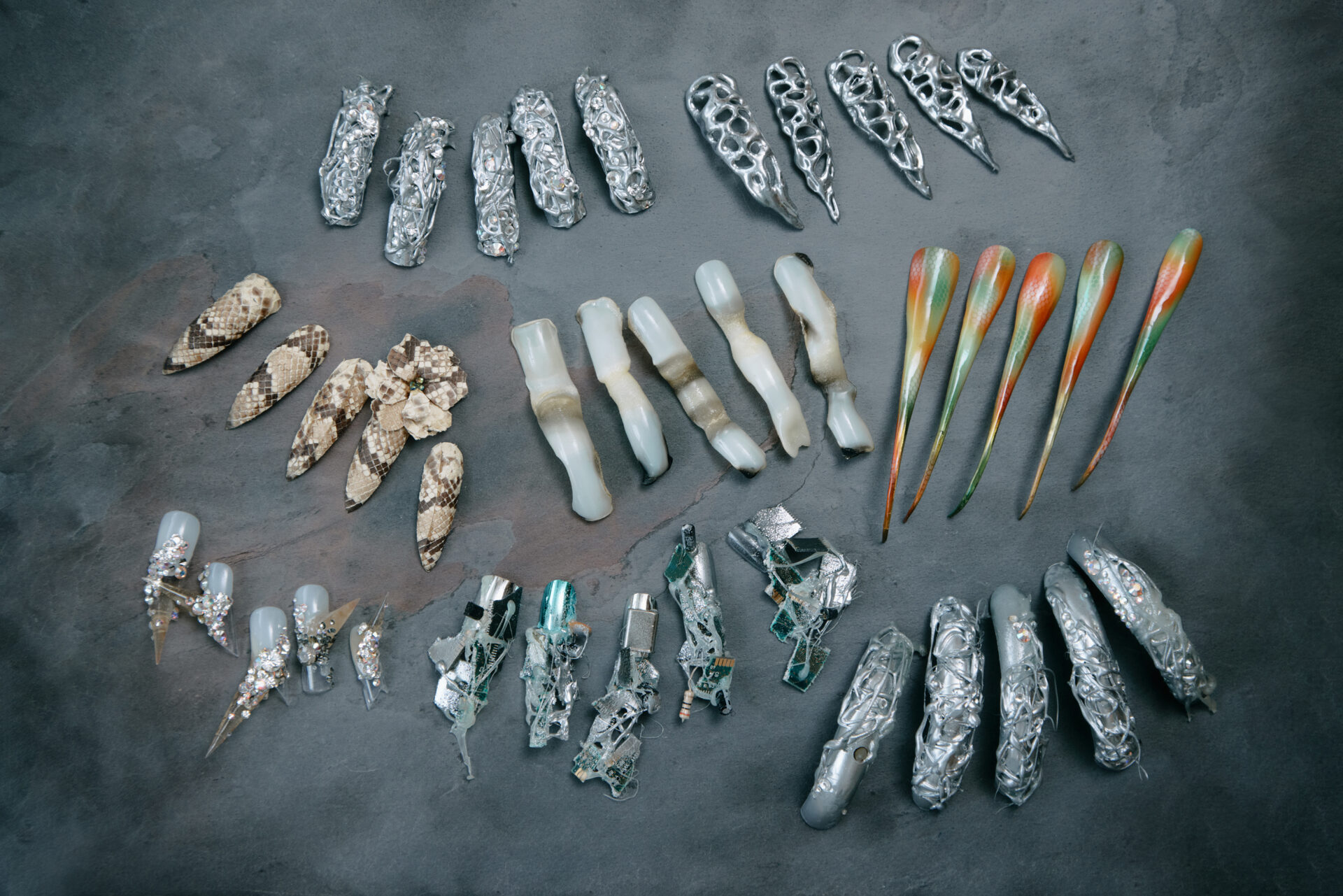
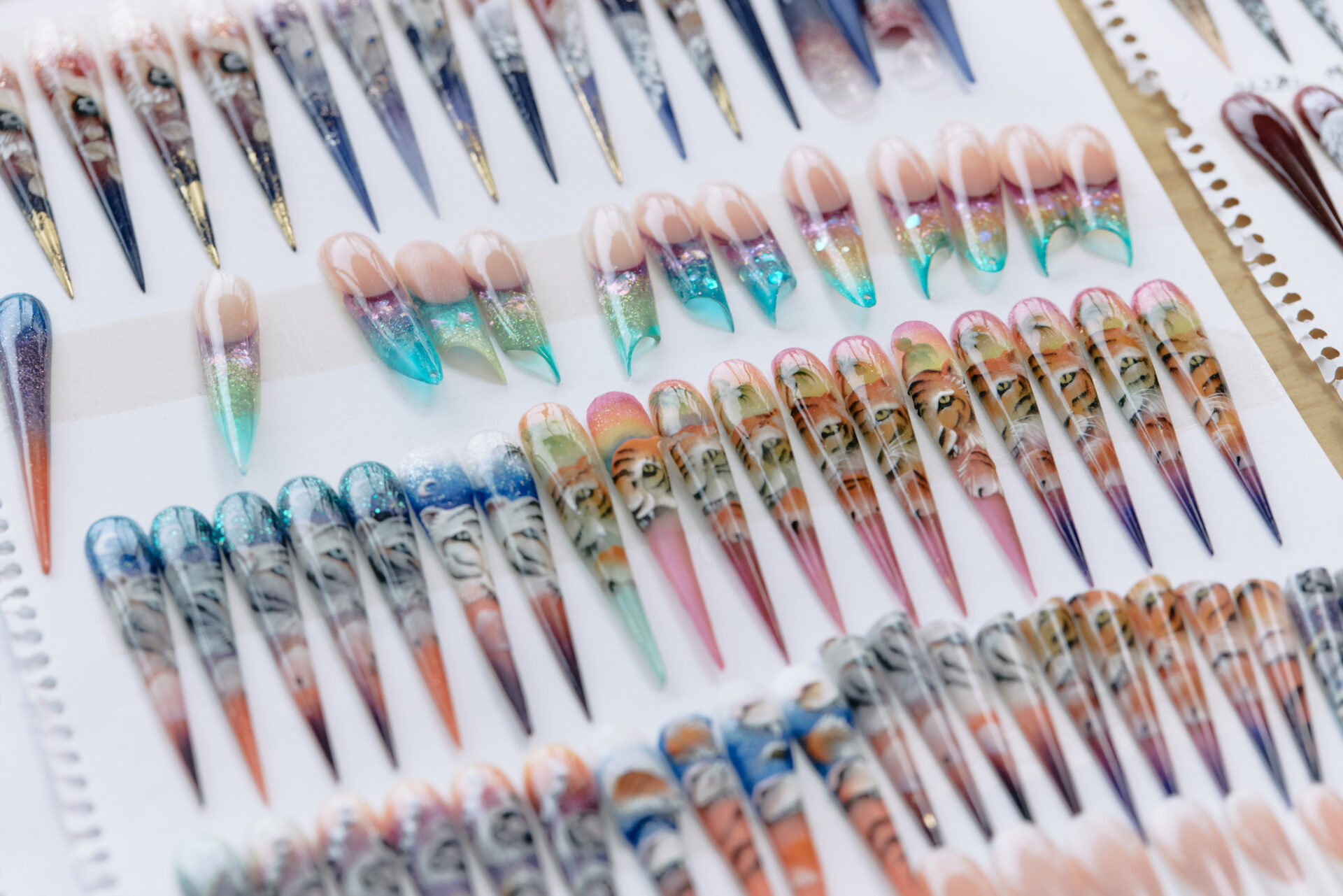
海外で総合優勝を重ねるネイルコンペティター、GENKIさん。浮世離れした美しさのアートや完璧なフォルム、その裏側にある思いとは? 世界チャンピオンの肉声をアトリエで伺った。
GENKI is a nail competitor who has won numerous championships overseas. What are the concepts behind his ethereal artistry and flawless form? We sat down with the world champion in his atelier to hear it in his own words.
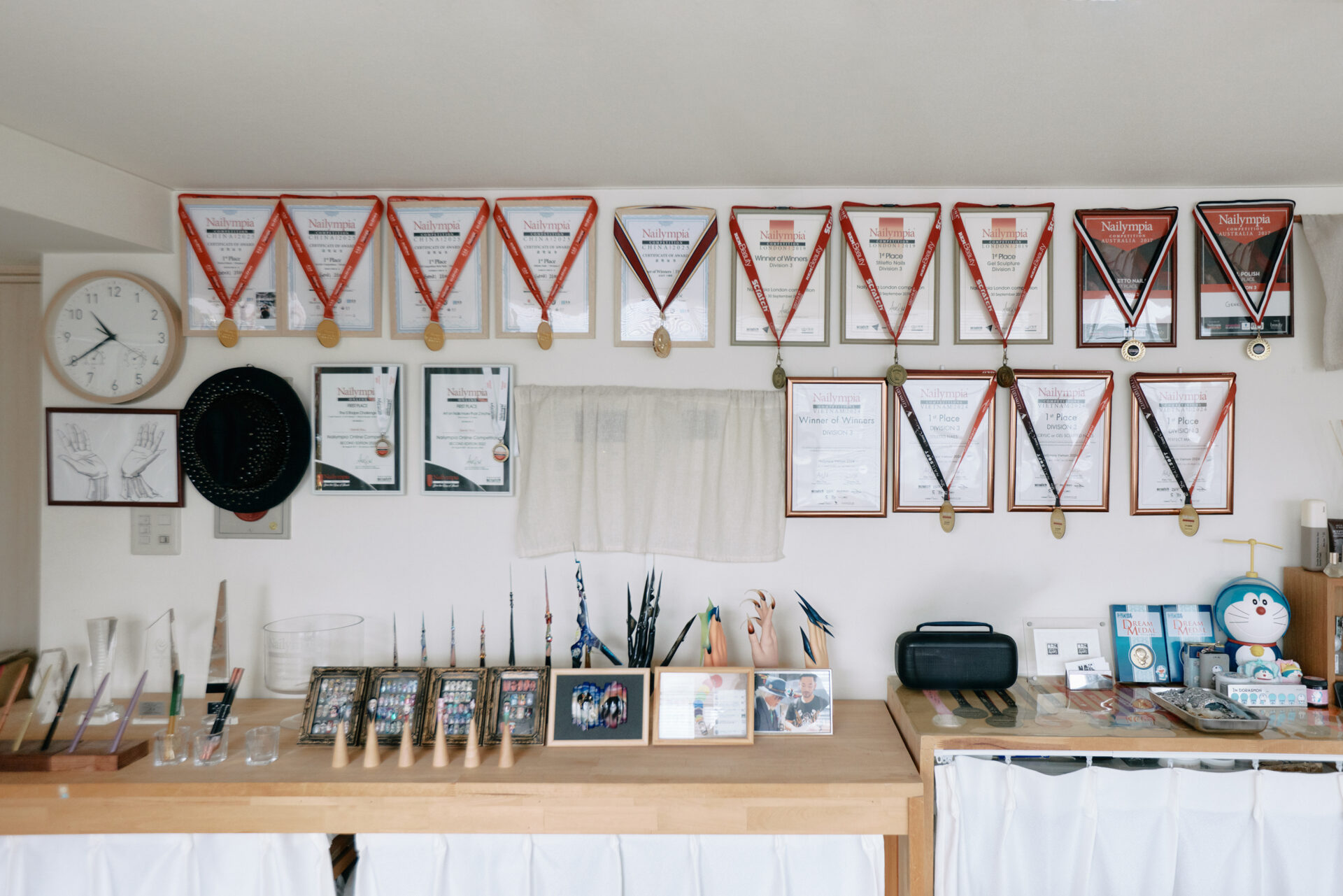
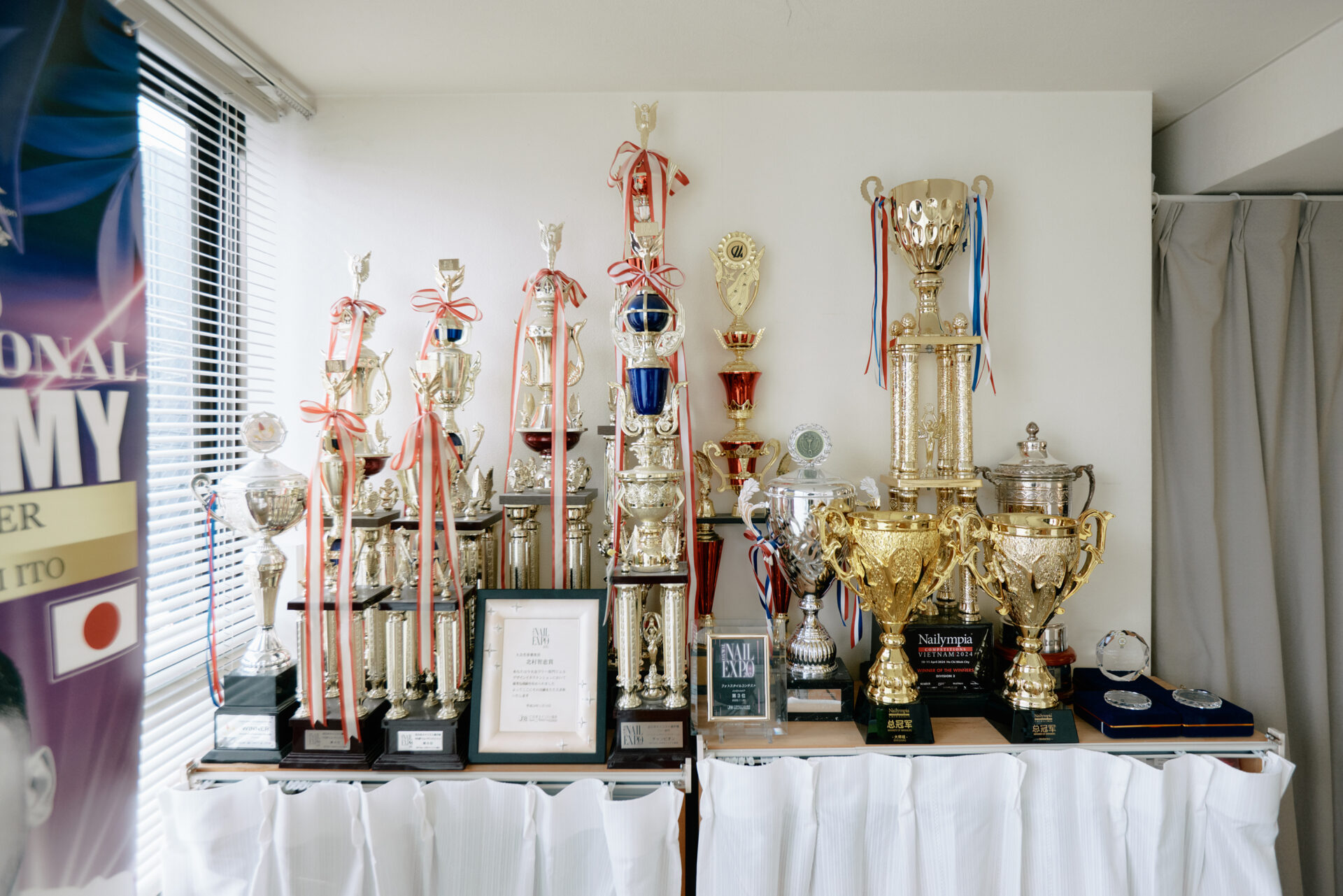
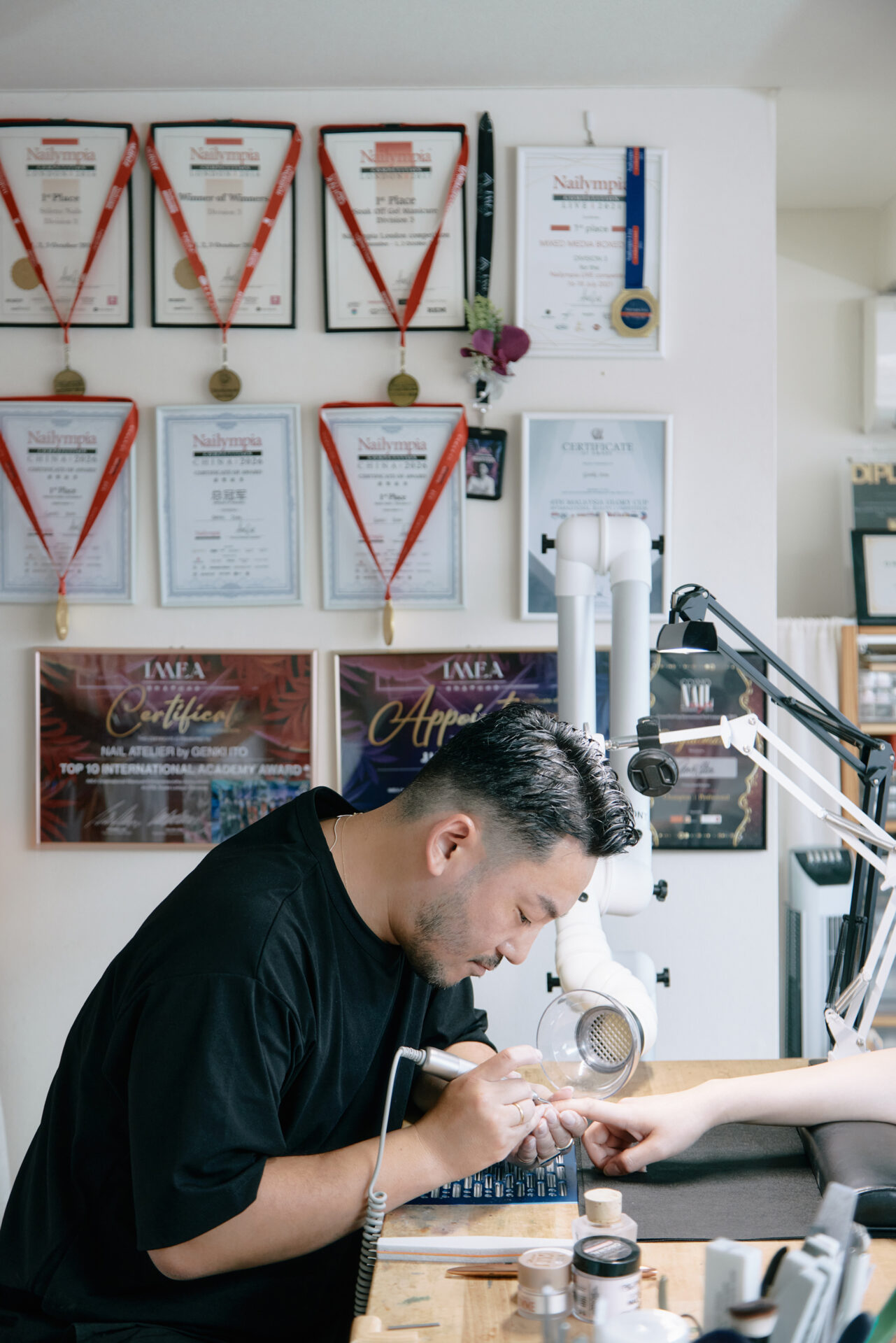
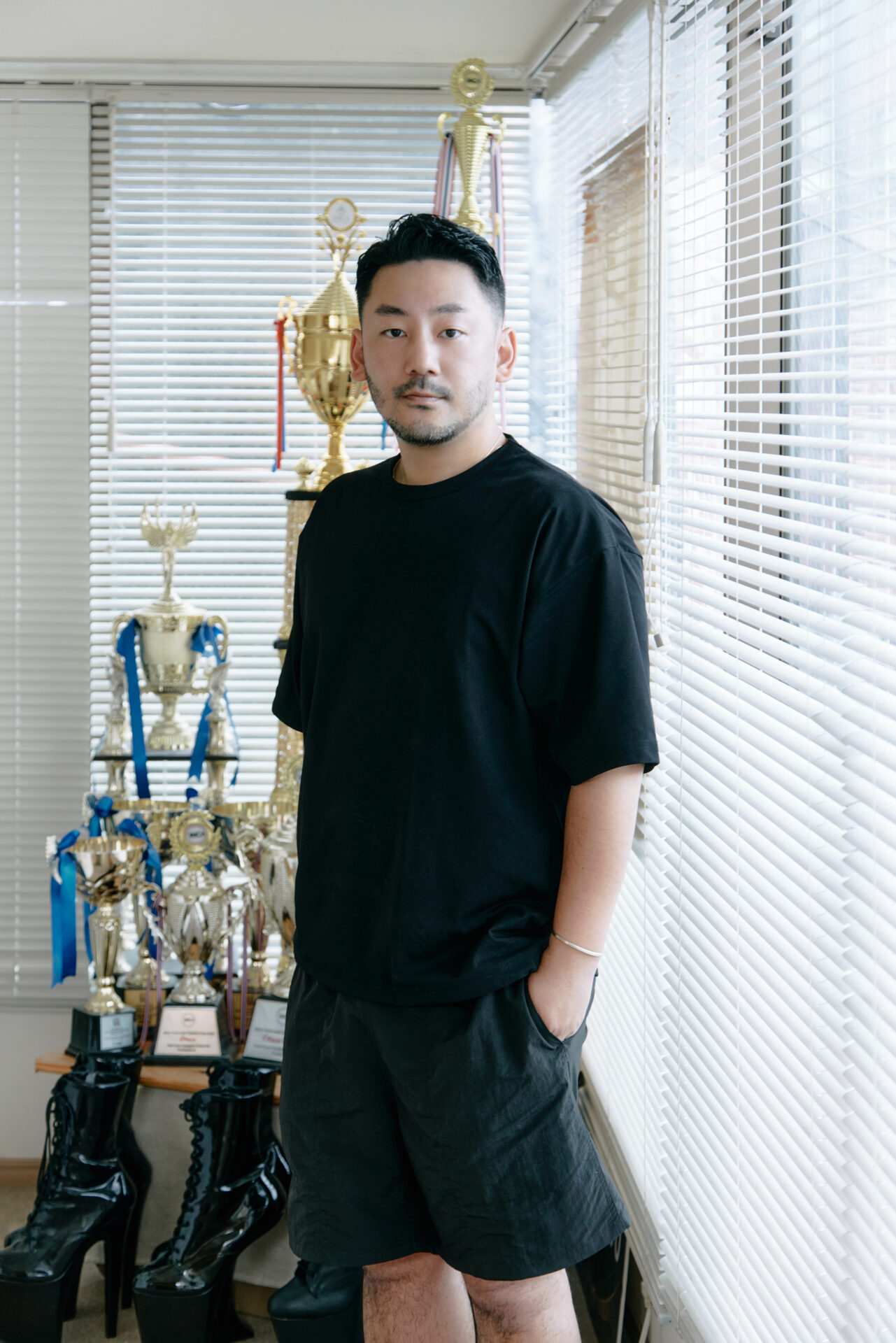
──初めてアトリエにお邪魔しますが、すごい数のトロフィーと賞状ですね。
コンペに初めて出た2006年からずっと出てますからね。ここにあるのは思い入れの強いものだけで、他は全部実家に置いてるんです。コンペに唯一出ていないのが2018年。2014年に初めて海外のコンペに出てから、しばらく日本のコンペから離れていました。日本と海外って全然違うんですよ。日本は試験みたいな空気ですけど、海外はお祭りみたいで。それが楽しくて海外ばかり出場していましたが、2023年に10年ぶりに日本のフロア競技に出ました。やっぱり日本はタイムスケジュールやルールがきっちりしてます。その点、海外の大会は「フランクにもほどがある!」って思うことも多々あります(笑) 日本は海外より種目が少なくて、競技ごとの倍率が高いですね。フレンチスカルプチュア10本を90分っていうのは日本ぐらいで、とてもじゃないけど終わらない。だけど日本と海外のコンペ、それぞれに良さがあると思います。
—This is my first time visiting your studio – I’ m amazed by all the trophies and certificates.
I’ ve been competing since 2006 and have done every year except 2018. These are just the accolades I’ m most attached to; the rest are at my parents’ house. After my first overseas competition in 2014, I took a break from Japanese competitions until 2023. The atmosphere is completely different. In Japan, competitions feel like exams, while overseas they’ re more like festivals. Japan has much stricter schedules and rules, while overseas they can be almost too relaxed! (laughs) Japan has fewer events too, so the level is very high. Making 10 French sculptures in 90 minutes is something you only see in Japan – it’ s almost impossible for me.
—これだけタイトルを獲っていて、なお出場し続ける理由は?
今の活動のメインがセミナーやレッスンなどの講師業で、自分が教わる側だったら、想像で話されるより実際の経験に基づいたポイントを知れたら嬉しいと思うんです。だからこそ限界まで現役でいたいと思っています。20年間コンペに出続けてるので、コンペの遍歴がグラデーションなんです。次はこのコンペ、その次は……って途切れなくて。どれに出場するかは、好きな競技をメインに今まで出たことがないものと、審査したことがないもの。地域によって切磋琢磨できる選手たちも変わってくるので、今後は出たことのない開催地に絞って修行するか、という感じです。もう勝ち負けは気にしてないんです。競技が終了した瞬間に、直すべきところがわかってる。1回の大会で失敗と成功を両方するようにしています。レッスンをしていると、失敗を恥だって思う人がすごく多いんです。だけど、「胸を張って失敗していいの! 私だって失敗するからね、まだ」 と伝えたいです。
—You’ ve already won so many titles. What keeps you competing?
These days, my focus is on teaching and coaching. If I were a student, I’ d want to learn from someone who has insights based on real experience rather than just imagination. That’ s why I want to stay active in the field for as long as possible. I’ ve been competing for 20 years, and I mainly choose them based on the event I like, whether they offer a new challenge, like a place or event I haven’ t experienced. I’ m not focused on winning or losing anymore. After every competition, I immediately know what I need to improve. I believe both successes and failures are important. When I teach, many people are afraid of making mistakes. But I tell them, “It’ s okay to fail, I still make mistakes too” .
—勝ち負けを気にしていないのも、失敗していいというのも意外です。
できない子の立場を理解するためには、失敗しておく必要があるんです。“できない”を積み重ねていくと、失敗がすり減って、成功が増えていく。生徒さんには、そのときの気温でできるように「気温と湿度、どういう感覚でミクスチュアを取ったかメモしておいて」ってアドバイスしてますけど、私は空港を降りた際に、既に使う道具のことを考えています。会場に着いたらパウダーを開けて触ってみて、ウォーミングアップ。「できない、できない!」ってなるので、その場で変更するんです。海外のコンペでは終わった後に審査員の講評シートをもらえるので、それを見て振り返れるし、失敗も記録して、研究材料にしています。
—It’ s surprising that you don’ t worry about winning or losing.
To understand the students that struggle, you need to experience failure yourself. The more failures you have, the fewer mistakes you make and the more you succeed. I tell my students to record things like temperature, humidity, and how the powder feels when they mix it, so they can adjust to the conditions. I do the same myself. When I arrive at a competition venue, I open the powder, touch it, warm up, and adjust if I feel something is wrong. I also receive feedback from judges and use those comments to reflect on my performance, record my mistakes, and keep learning.
—ネイルの道に入った経緯を教えてください。
祖父も父も内装業で母が美容師、親戚もみんな建築関係。兄も今は服を作ってるので、物作りが身近な環境で育ったんです。小さい頃によくやっていたのは切り絵。恐竜や怪獣のツメ先とか尖ってるものが大好きで、将来は造形をしたいと思っていました。モスラの造形師、村瀬継蔵さんとは大人になってから東京都瑞穂町の郷土資料館で面識を得て、2019年のロンドン大会前にもお会いしたんです。モスラのネイルを作って行ったら「僕にくれるの?」「あげな〜い」って(笑) ネイルを始めたのも造形がしたかったから。中学生の頃、ネイル雑誌が創刊したり、100均にネイルアートブックが並んだり、日本のネイル業界が盛り上がる時期だったんです。最初は学校の絵の具で、次は100均やホームセンターで絵の具とかワックス、パテを買って。しょっちゅう親から「窓を開けろ!」って言われながら(笑) 13歳で初めてチップが雑誌に掲載されて、中学卒業後は東京のネイルスクールに入りました。茨城から通うのが大変で、15歳で1人暮らしを始めたんです。
—Tell us about how you got into nails.
I grew up surrounded by creativity. My grandfather and father worked in interior construction, my mother was a hairstylist, and my brother makes clothes. As a child, I loved making paper cutouts and was fascinated by sharp shapes, like dinosaur claws and monsters. I dreamed of becoming a sculptor someday. That’ s why I started nails. During junior high school nail magazines were becoming popular in Japan, and the industry was growing quickly. At first, I used school paints, then experimented with wax and putty from 100-yen shops and hardware stores. My parents often told me to open the windows because of the smell!(laughs) When I was 13, one of my nail tips was featured in a magazine. After junior high school, I joined a nail school in Tokyo and moved out at 15 because
commuting from Ibaraki was too difficult.
—コンペティターになったきっかけは?
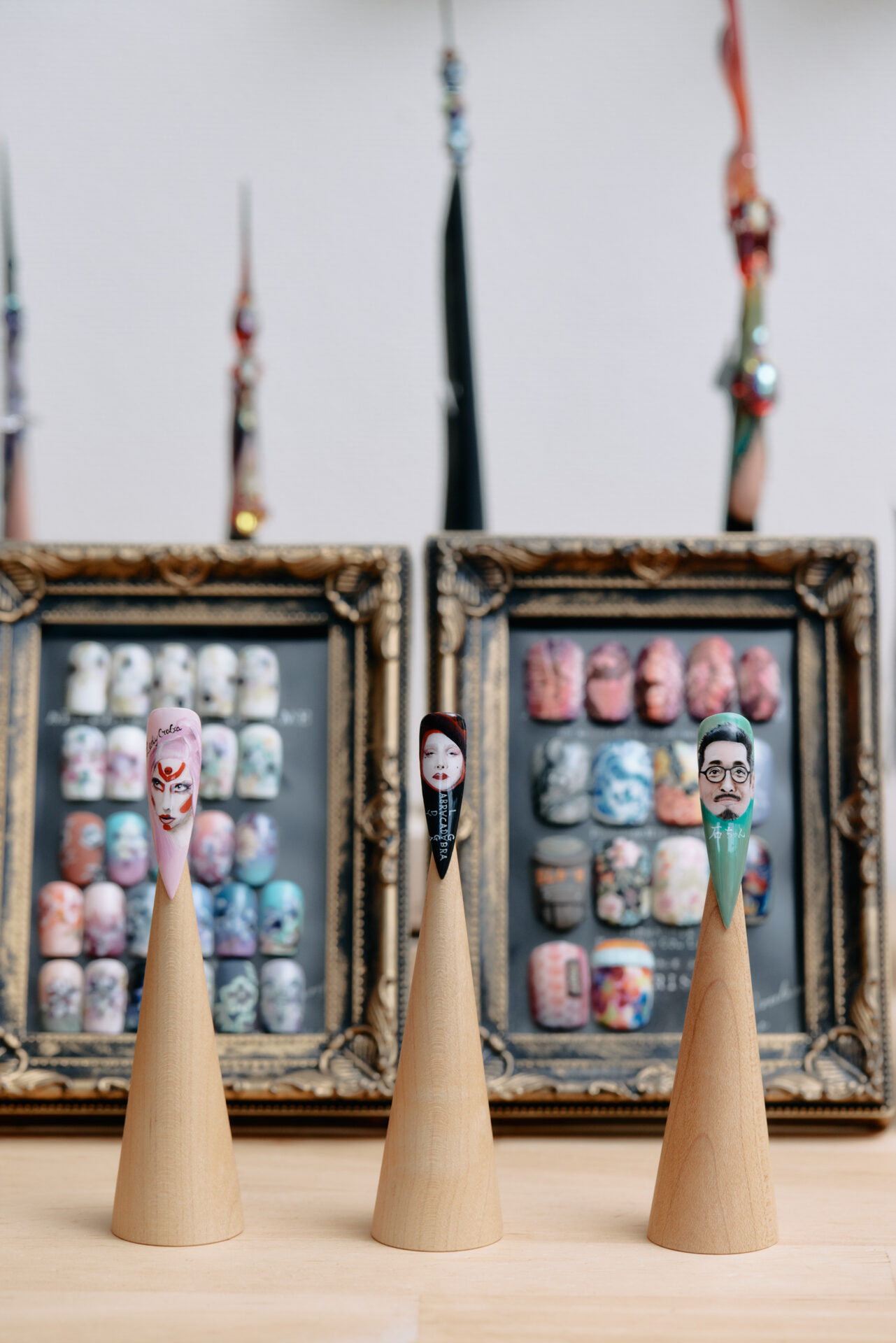
当時はまだ会場でやるコンペの存在を知らなかったんです。チップの作品を見てもすごいものばかりで、今のみなさんと同じように、気軽に出ようとは思えませんでした。浜崎あゆみさんのネイルをしていた番長(三浦加納子さん)がホームページ上でやっていたコンテストに作品を送って、特別賞をいただいたのが初めての受賞です。スクール卒業後にサロン勤めしていた頃、ネイル雑誌の読者投稿ページに田賀美鈴先生が描いたチョウチョの作品が載っていたんです。私、小さい頃からチョウチョのフォルムがすごい好きで、子供の頃から追っかけてて。そのアートを見て“この人のところに行きたい!”って習いに行って、その後カルジェルで働きました。カルジェル時代に、より細かく描き込むようになって、周りに触発されたのもあって、フラットアート、ミックスメディアの展示作品を出すようになりました。コンペは自分の好きなものを作れるので、サロンワークとは違った面白さに出合えました。私わがままだから、コンペ以外でも、自分の好きなものだけを作りたいんですよ。
—What inspired you to become a competitor?
At first, I didn’ t even know competitions at actual venues existed. The entries looked so incredible that I never imagined I could enter one myself. My first-ever award came when I submitted a piece to a contest that Bancho (Kanako Miura), who did Ayumi Hamasaki’s nails, was running through her website — I won a special prize. After graduating from nail school, I discovered a butterfly design by Misuzu Taga in a nail magazine. I had always loved butterflies, so I thought, “I want to learn from this person.” I studied under her and later worked at Calgel. Competitions gave me the freedom to create what I truly loved, and I found a joy that was completely different from salon work. Even today, I simply want to create things I love.
—そこから快進撃ですね。アートは事前にスケッチなどをするんですか?
ツメに直接描いていきます。練習が好きではないので、何度も同じことをしたくない。練習ではタイムカウントもほぼしません。開催間近になってタイムカウントして「どうしよう、終わんない!」って毎回言ってます。モデルさんが「はいはい、前回と一緒」って(笑) 周りから見たら練習してるけど、私の中では遊びながらです。子供の絵ってすごくないですか? 計算して描くと単調になって、発見がなくなってしまうので。練習よりも研究って考えるようにしています。
—Things really took off from there. Do you make sketches or prepare before creating your nail art?
I paint directly onto the nails. I don’ t like repetitive tasks, so I rarely practice in the traditional sense. Right before a competition, I finally check my timing and always think, “How am I going to finish this?” (laughs) My model just says, “Same as always” . (laughs) From the outside it looks like practice, but to me it’s more like play. Like children’ s art. If you plan everything, it gets monotonous and you stop discovering anything new. I try to think of it less as practising and more as research.
—特に印象的な大会は? また、モデルさんはずっと同じ方ですか?
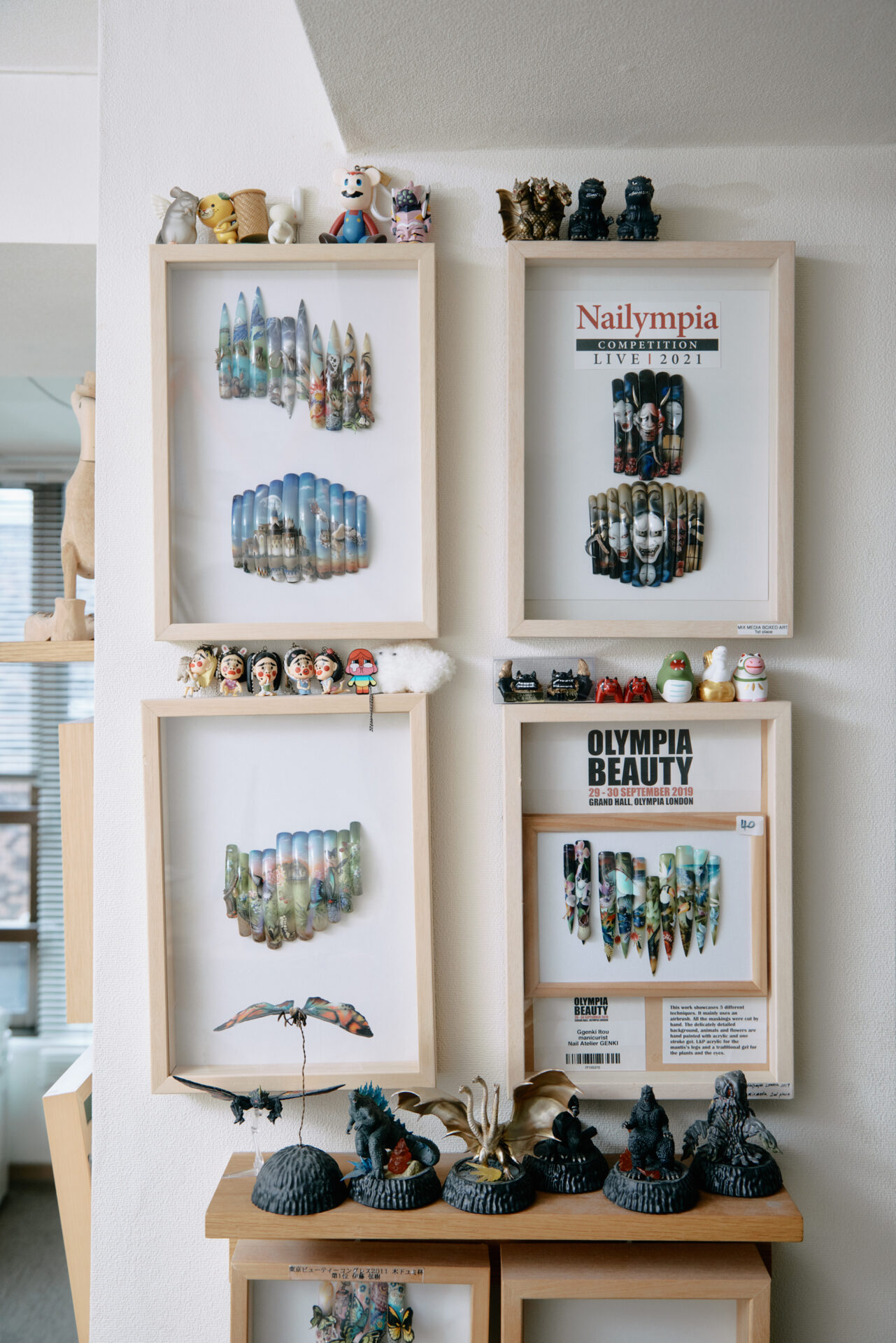
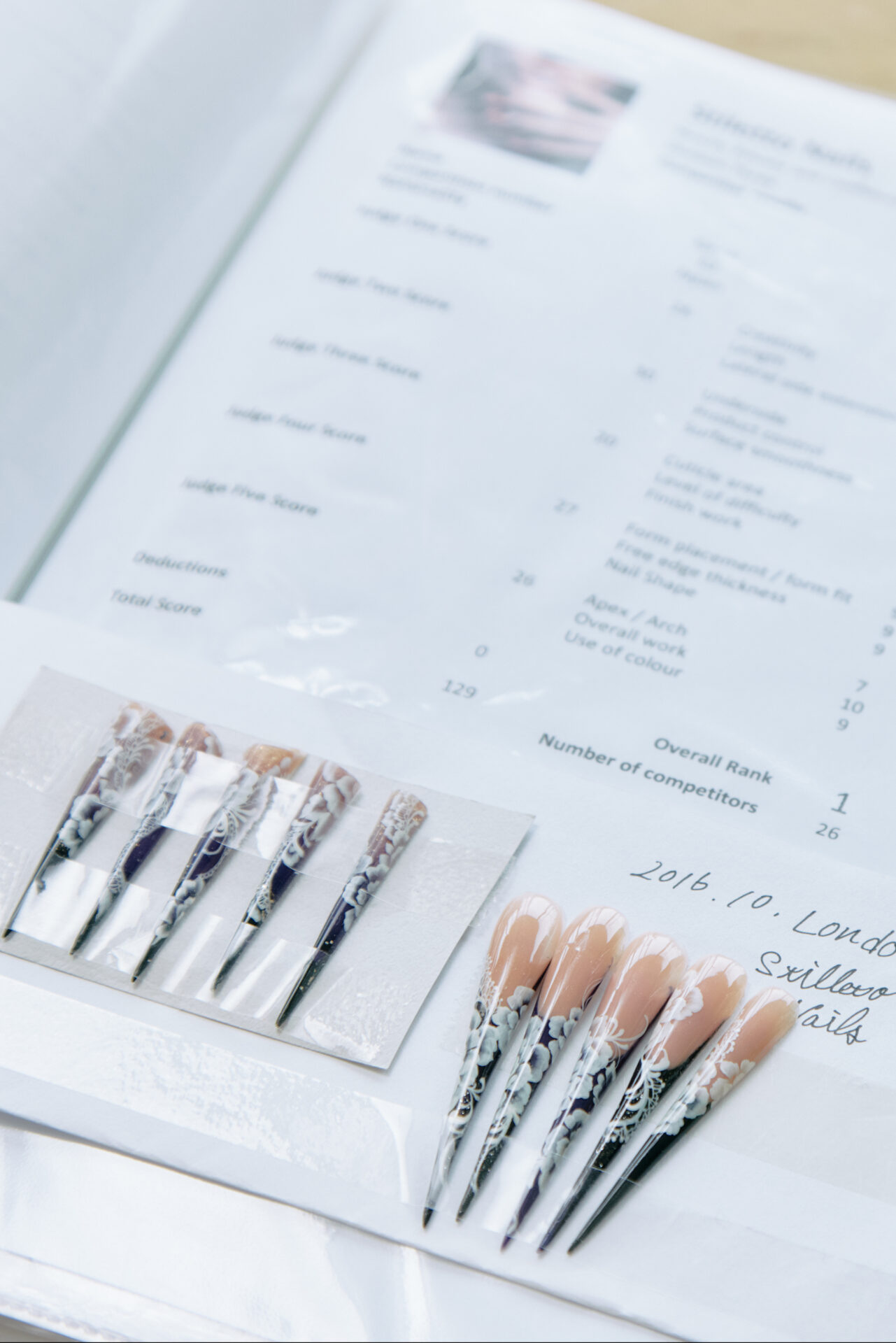
2016年の『ネイリンピア』ロンドン大会かな。フレンチ、アート、ケアの合計得点で競うので、オールラウンドにできないとチャンピオンになれないんです。プロ向けの上位クラス『Division 3』で日本人初優勝を獲れたときは達成感がありました。同じモデルさんにお願いするのは最大でも3回までって決めています。その指やツメに慣れてしまうので。どんなツメでもできるようにならないと、って思っています。オールラウンドで戦うのも、モデルさんを変えるのも、自分の中で“できない”っていう状態が嫌だから、できるように“やる”んです!
—Which competition stands out the most to you? And have you always worked with the same model?
The 2016 Nailympia London competition. The champion is decided by the combined scores for French nails, nail art, and nail care, so it requires complete skill in every area. Winning the top professional class, Division 3, as the first Japanese competitor was a meaningful achievement. As for models, I try not to work with the same person more than three times. If you do, you become too familiar with their nails. I don’ t like feeling unable to do something, so I keep hallenging myself until I can.
—これからの展望を教えてください。
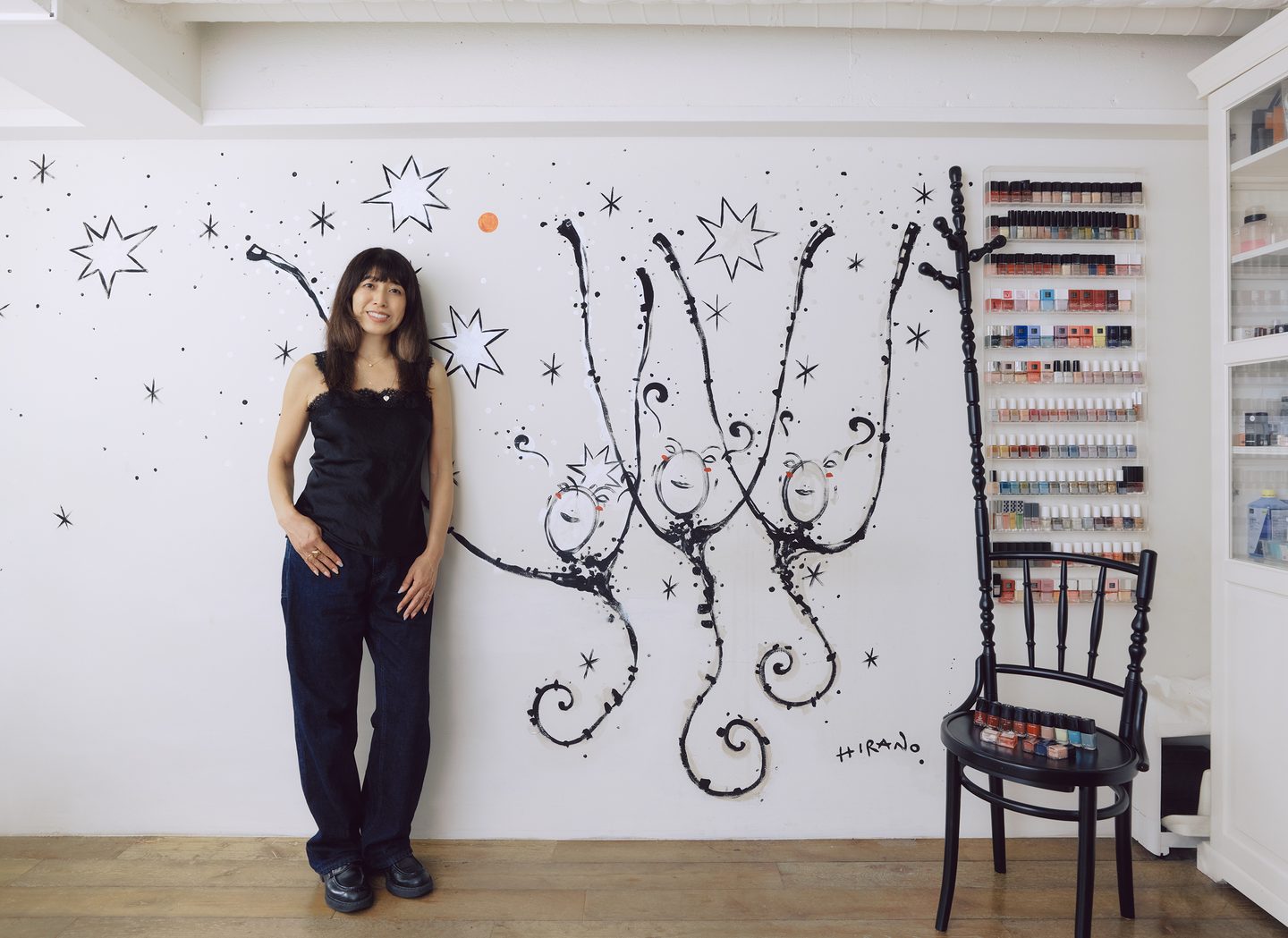
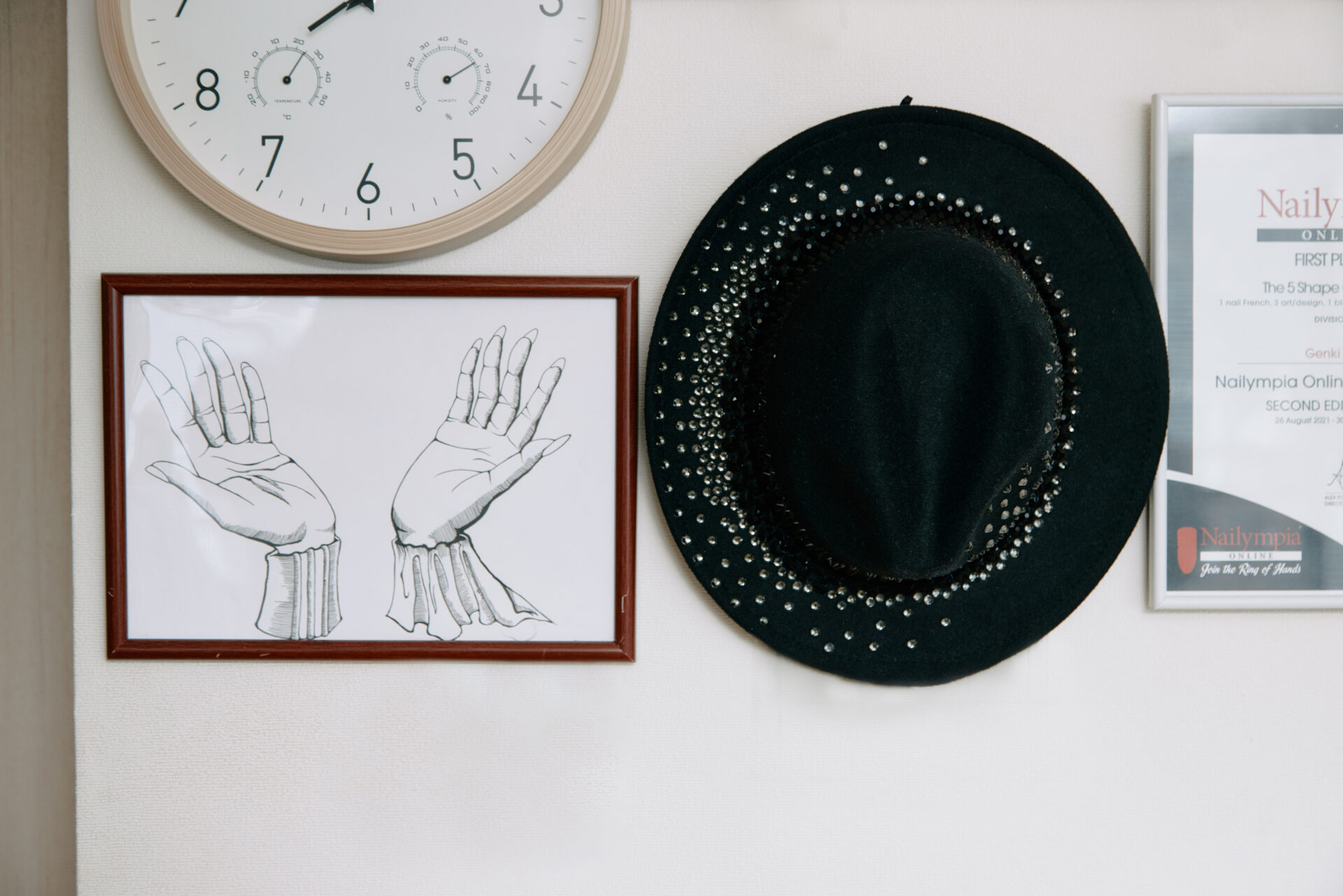
競技中に死にたいの。それで死んだ後もネイル! いずれ手も動かなくなるし、目も見えなくなる。研ぎ澄まされた感覚で、目を瞑っててもできるっていう風になりたい。コンペの作品を見て“こんなのできない”って思ってる人が多いけど、どの人も伸びると思う。私の場合は誰にも習わず叩き上げだったので、時間はかかりました。どんな人でも学んだら必ず変わります。入口に飾ってる絵はそれを表してるんです(P62 左上の写真)。ツメが短くて袖が細い左側の手は習う前、ツメが長くて袖が広がってる右側の手は学んだ後。イメージを伝えて兄に描いてもらいました。ただ、誰に習うかですごく変わる。その人の癖やアートの上達は練習次第だけど、習い方を間違えると伸びるものも伸びないんです。レッスンでやる一つ一つには理由がある。それをわかっててやるのかどうかが伸びに反映します。同じように、道具を知ることもすごく大事。よく「ナイロンブラシだと上手くできない」って声を聞くんですけど“なんでだろう”って考えない人が多い。ネイル歴が浅い世代には、SNSがバイブルになっちゃってる人がいます。自分で1回やってみて良し悪しを判断しないと。筆圧とかテクニックとか自分を客観視すると、合う道具がわかってくる。今は便利なものがたくさんあって、商材の品質も上がってて、それで“できない”は通用しないですよね。だけど慣れてくれば、どんな道具でもできるようになりますよ!
——Tell us about your future outlook.
I want to die mid-competition. And even after I’m dead – still doing nails! I want to reach a point where I can create with my eyes closed. Many people see competition pieces and think, “I could never do that” , but I believe anyone can improve. I built my skills from the ground up. It took time, but people can change when they learn. However, who you learn from matters. Every technique has a reason behind it and understanding that reason is what leads to growth. Knowing your tools is also essential. Instead of simply saying, “I can’ t do it with this brush” , ask yourself why. Observe your technique and find what works for you. Today, nail products and tools have improved greatly. With the right knowledge and experience, you can learn to use any tool.
GENKI(Nail Atelier GENKI)
茨城県生まれ。13歳でネイル雑誌に掲載され21歳でJNA認定講師資格を取得。2006年より国内外の大会で多数受賞。2016年『ネイリンピア Division3』 で総合チャンピオンに。以後も優勝を重ね、現在は国際審査員としても活動中。自身のアトリエを中心にセミナー、レッスンを行う。
GENKI(Nail Atelier GENKI)
Born in Ibaraki Prefecture. Featured in a nail magazine at age 13 and obtained JNA certified instructor qualification at age 21. Since 2006, he has won numerous awards at domestic and international competitions. In 2016, he became the overall champion at Nailympia, Division 3. He has continued to win competitions and currently works as an international judge. He conducts seminars and lessons primarily at his own studio.
PHOTOGRAPHER : Chizuru
EDITOR : MARIKO SOTOGUCHI
こちらの情報は『NAILEX 2026年10月号』に掲載された内容を再編集したものです。