ネイルを媒体に日本の美を伝える現代アーティスト奥畑実奈|JAPANESE CRAFTS NAIL
2026.04.23
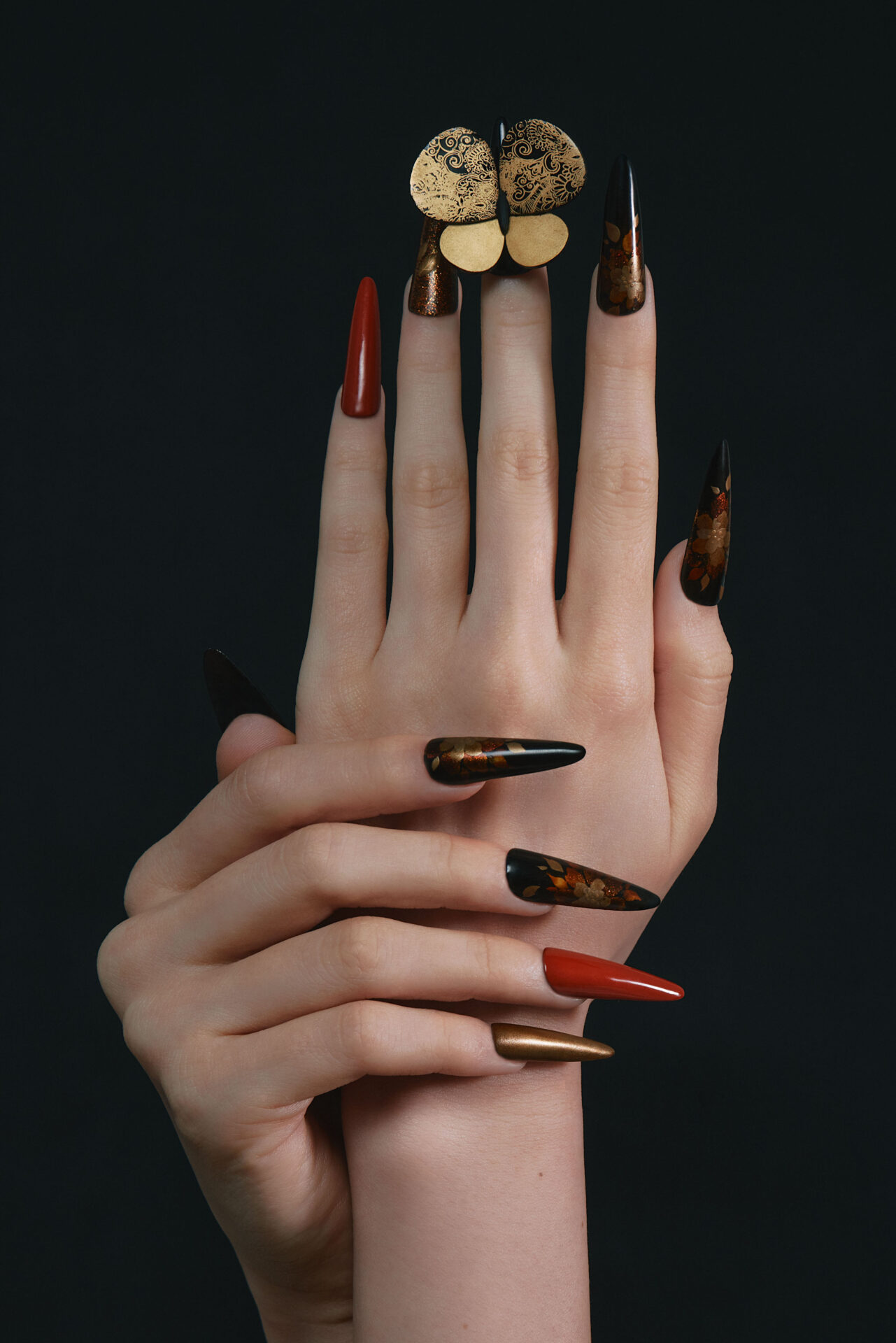
漆でネイルチップを作り装飾する。伝統工芸の技が詰まった彼女のネイルは、本来なら消えていくツメというパーツに再び生命を宿した美術品。古くから受け継がれる素材と技術に現代のネイルを融合させた作品たちは、小さくとも雄弁に輪廻転生を物語っている。
She creates and decorates nail tips using urushi lacquer. Her nails, imbued with the techniques of traditional craftsmanship, are works of art that breathe new life into the nail – a part of the body that would otherwise grow and disappear. Her pieces fuse modern nail art with ancient techniques creating small yet eloquent reflections on the cycle of life.
「ネイルを、時代を超えて残る芸術にする」
まだ誰も見たことがない美を追い求めるアーティストの肖像
彫刻を学んでいた大学時代、ネイルを通した美術表現に思い至った奥畑さん。大学院と並行して黒崎えり子ネイルビューティカレッジで学び、ネイル技術を習得した。その後「erikonail」で働き、国内外のコンテストで優勝を飾った。
ツメは伸びては切られ、やがて消えていく。商業的に消費されるネイルアートの世界に、美術家の視点で生み出したのが「乾漆ネイル」だ。ルーツである奈良県の仏像制作に用いられる漆を使い、芸術へ昇華させることを目指した。
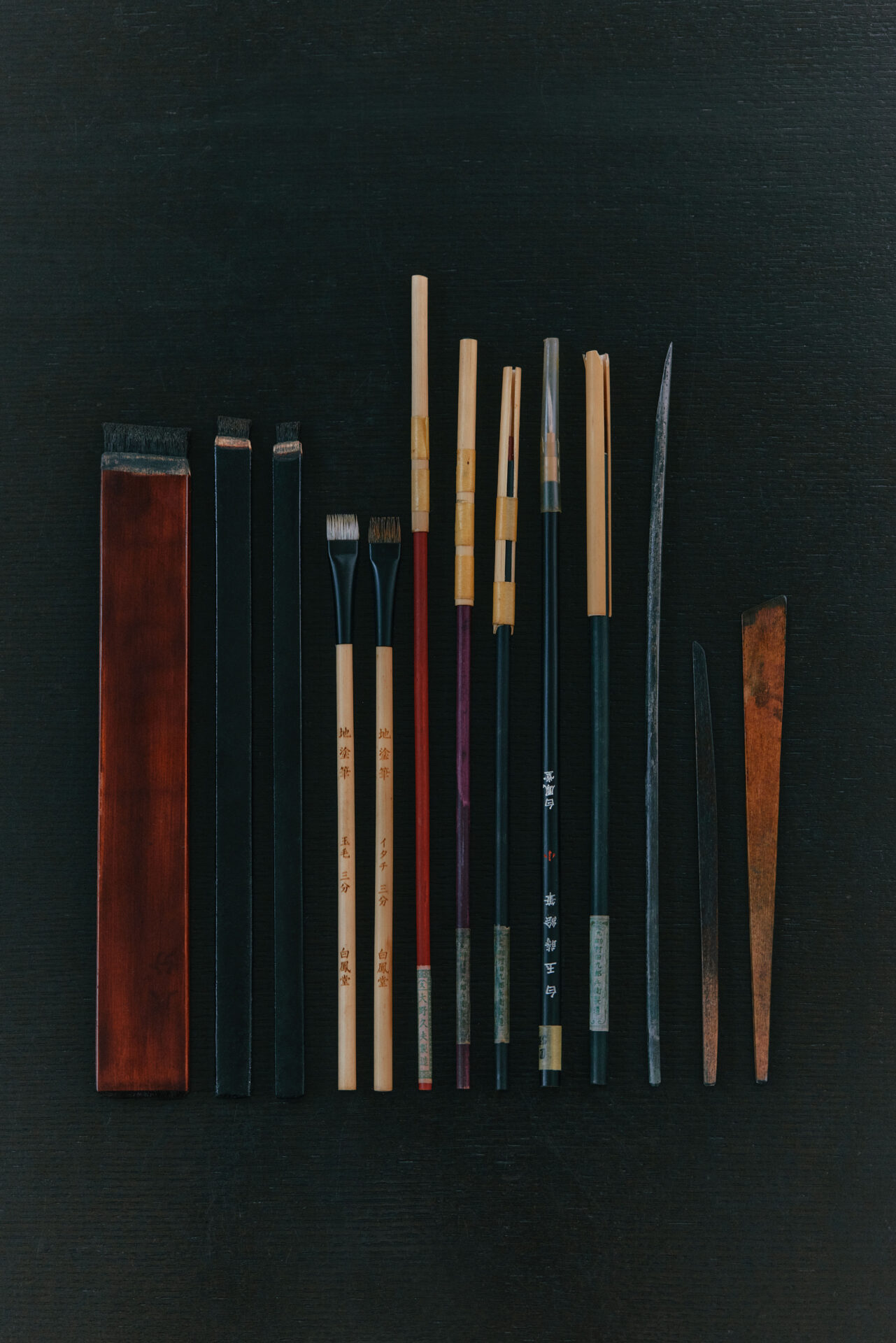
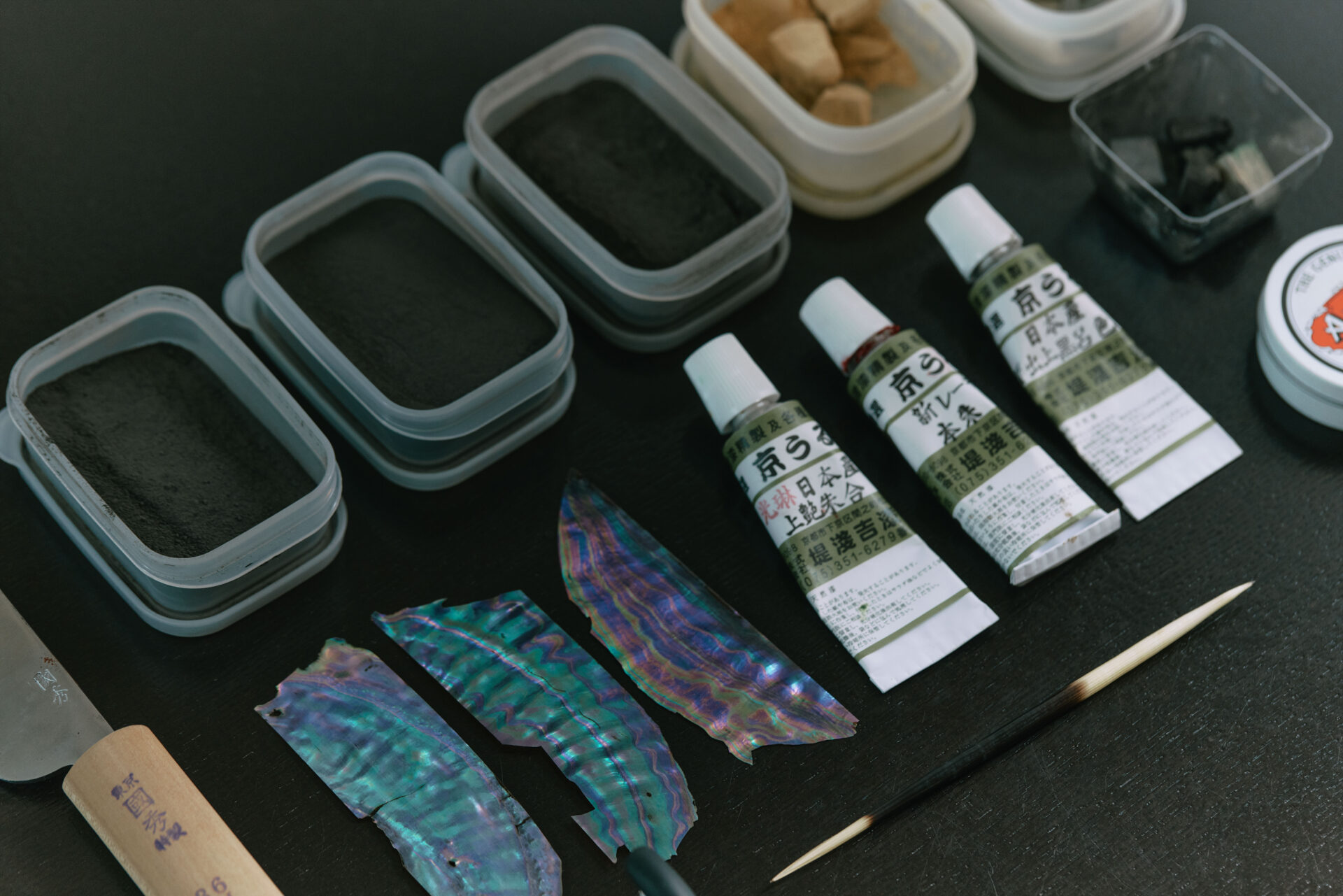
再び通った大学院では、紫綬褒章を受賞した小椋範彦名誉教授に師事した。漆でネイルを作るという前人未到の領域に踏み出し、「脱活乾漆」と呼ばれる技法で独自のネイルチップを完成させた。チップの土台が完成するまでの工程数は少なく数えても40 以上。実はそれ以前に、道具も作っている。金粉を蒔くための粉筒は葦の茎を乾燥させて自作する。ヒノキを削り出したヘラは形や厚みを整え、手触りよく仕上げている。職人が作った筆も、自分の手に馴染むようにアレンジする。主役の漆は必ず1 度漉してから使い、塗るたびに乾燥させる必要がある。急いで乾かすと縮むため、あくまで自然の乾燥を待つ。そうして1 ヶ月以上の時を経て完成したネイルチップは非常に堅牢で、湿気に強い特徴を持つ。そこに金粉を撒いて描く「蒔絵」や貝殻を使った「螺鈿」「芝山」といった技法で装飾を施していくのが彼女の代表的なスタイルだ。
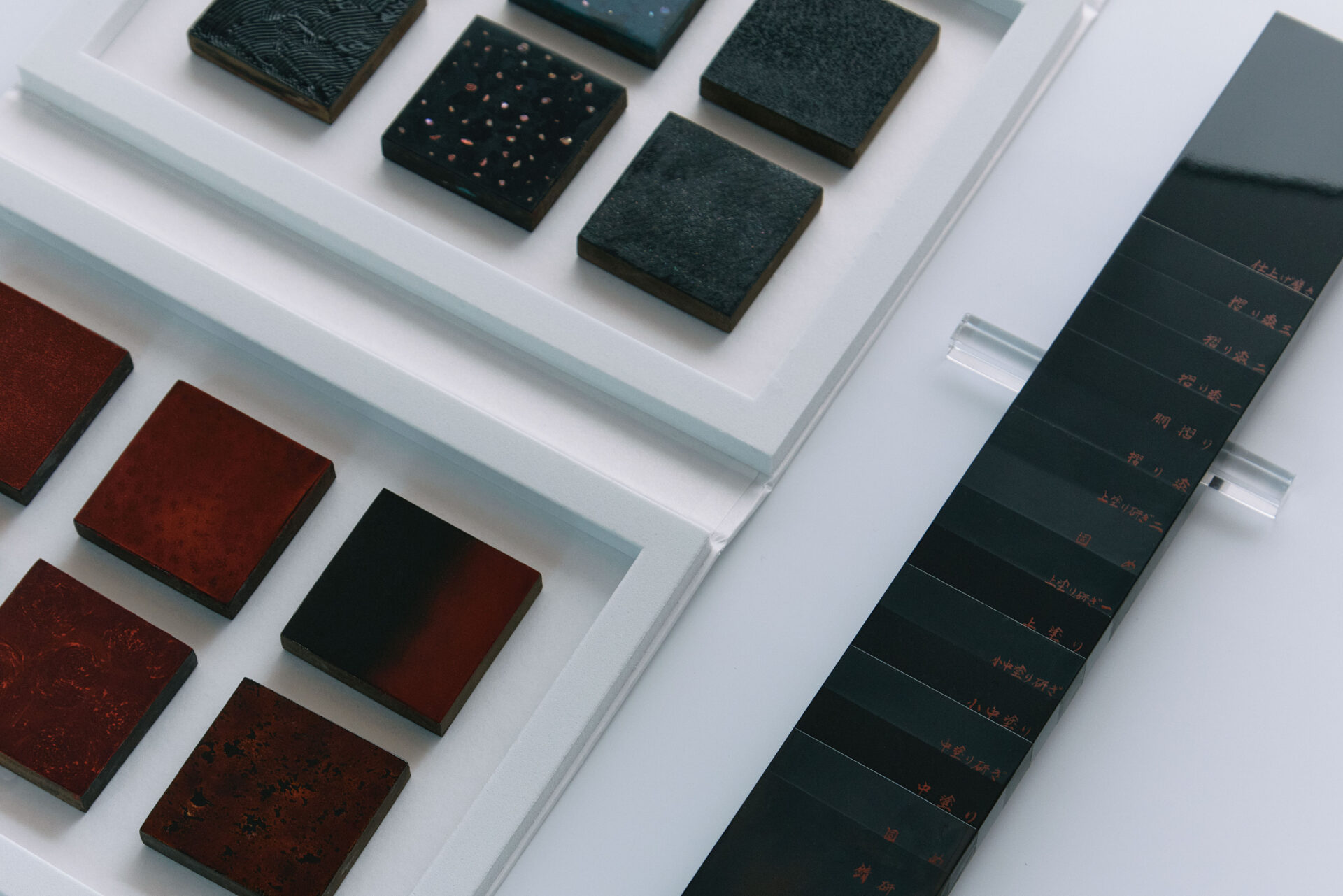
漆でネイルを作る試みは容易ではなかった。ネイルとしての造形美、また漆芸としての美しさや堅牢さを備えた作品に仕上げるためには、どちらも一流の技術が必要になる。「本堅地(ほんかたじ)」と呼ばれる、強固で美しい土台には奥畑さんの漆芸作家としての腕が光っている。石膏に生漆を塗り、乾かした後に糊漆で麻布を貼り、切り粉錆を擦り付けて布地の凹凸を消す。その上から「地の粉」と呼ばれる珪藻土の粉末と糊漆を混ぜて塗り、強度を補う。再び乾燥させ砥石で平らにし、錆漆で小さな凹凸や穴を埋めていく。さらに中塗り、上塗りを繰り返して、ようやく土台が出来上がる。
そこからネイルに相応しい薄さと形に削り出すと「乾漆ネイル」のチップが完成する。その長さや丸みには、ネイリストとして培った感覚が活きている。
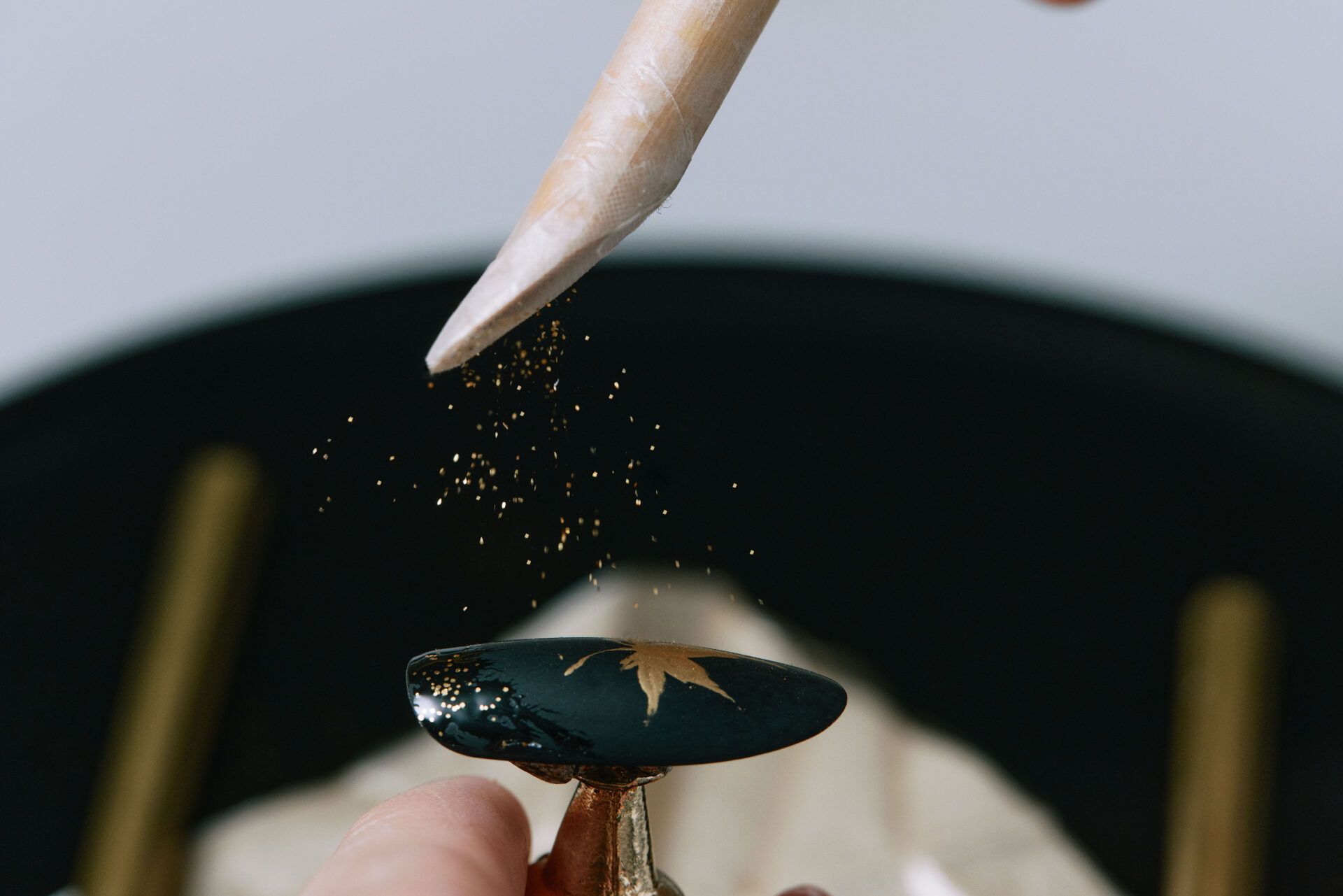
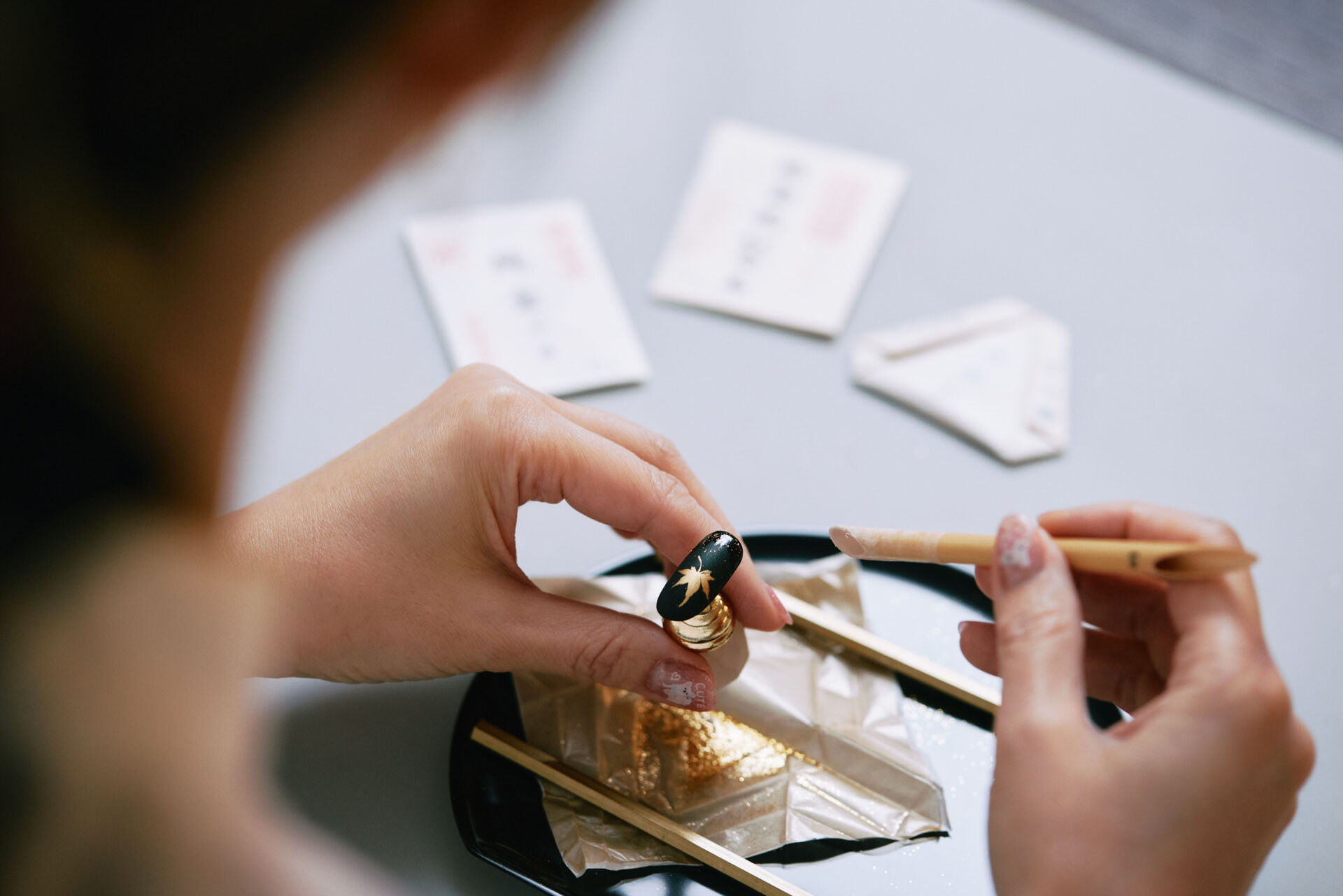
アートにも伝統工芸の技が使われる。例えば紅葉を「研ぎ出し蒔絵」で表す際は、朱みのある絵漆を「赤軸」と呼ばれる筆で描き、乾く前に金粉を蒔く。乾燥後に再び漆を塗って金を留めたのち「駿河炭」で研ぎ、表面に金を浮かび上がらせていく。球状の金粉は半球状まで研ぐことで輝きが最大化する。理屈はシンプルだが、曲面に蒔かれた金粉は、それぞれが違う角度で土台に付いているため、ネイルファイルで削るわけにはいかない。慎重に研ぎ、目に見えないミクロの世界をコントロールする。そして作品の最終段階では指で磨き上げる。まさに作家の手仕事だ。
伝統工芸の技法を忠実に継承する一方、奥畑さんは時代を読む力にも長けている。昨年は生成AIとネイルのコラボレーション展示『Digital Rimi(デジタル凛美)Al x Nailist』を開催した。まだAIの活用が一般的でなかった2年前から構想し、AIが出力したデジタルアートを「erikonail」出身のネイリストたちによる高い技術力で再現してみせた。
アート、テクノロジー、職人技を一体化させた革新的な展示だったが、提案した当初、参加したネイリストたちの反応は薄かったと言う。「なぜやるのか?」という問いの答えは、奥畑実奈という存在が漆芸作家やネイリストである前に現代アーティストだからだ、という点に帰結する。
「人がやっていないことを最初にするのは大変です。批判が起こりやすく、理解されにくいと思います。周りに納得してもらうには結果を出すしかない。その域まで到達して、見せるしかないんです」。彼女を突き動かしているのは、まだ誰も見たことがない作品への渇望だ。彼女はこうも語る。「漆芸にもネイルの世界にも尊敬する方がいて、どちらも極めるのに終わりがない世界だとわかっています。だからその2 つを組み合わせると決めた時、覚悟を持ちました」
ネイリストとして勤めた期間は約20 年に及ぶ。「こんなに長く続けるとは思っていなかった」と微笑みながら、その経験にマイナスなことは一つもなかったと彼女は言う。求められる技術と接客のレベルは高かったが、何かを身に付けるうえで厳しさがあるのは当然という心構えがあった。元々ネイリストを志していなかったため、憧れと現実のギャップが生じることは一切なかった。ネイリストとして独立を考えたことも、もちろんなかった。仕事上での厳しさは、彼女にとってプラスなことばかりだった。アクリルスカルプチュアの造形を究める中で理想的なネイルフォルムを知り、コンテスト出場を通してスピード感を養った。それらを日頃の仕事に落とし込み、お客様からお金を受け取る身でありながら「ありがとう」と言われることに日々感動した。一流のネイリストとして仕事の喜びを十分に味わったのち、3 年前から作家活動に専念している。
「乾漆ネイル」が一つの完成を迎えた今でも、ネイルに対する彼女の思いは変わらない。マニキュアボトルをイメージしたオブジェや着脱可能なリング型ネイルといった作品にその愛が表れている。最近はオートクチュールビーズ刺繍を取り入れたリング型ネイルアクセサリーを制作した。そのためにフランスの伝統的な手刺繍の技法を学びに行ったと言う。どの作品も共通して、本来であれば消費されていくものに永遠の命が吹き込まれている。ツメ先を彩る楽しみは、国境も時代も超えていく。「歴史に残る作品を見ると、江戸時代のような穏やかな時代に良いものがたくさん生まれていたことがわかります。展覧会の前は切羽詰まってしまいますが、制作には穏やかな心で向き合うようにしています」ゆったりとした口調だが、その声は力強く澄んでいた。
“To make nails an art form that transcends time”
A portrait of an artist in pursuit of a beauty no one has ever seen before.
Okuhata began exploring nails as artistic expression while studying sculpture at university. She trained at Eriko Kurosaki Nail Beauty College, and went on to work at erikonail winning competitions both in Japan and abroad.
Nails grow, get cut, and eventually disappear. Looking at the world of commercial nail art with the eye of an artist, she conceived of “dry lacquer nails”: kanshitsu nail. Inspired by the urushi lacquer used in the Buddhist statues of her home city Nara, she set out to elevate the craft into fine art.
Returning to graduate school, she studied under Professor Emeritus Norihiko Ogura, creating original nail tips using a technique known as dakkatsu-kanshitsu (dry lacquer casting). Her process is meticulous – completing just the base of a tip involves over 40 steps, and she even makes her own tools. The powder tubes used for sprinkling gold dust are handmade from dried reed stems, while spatulas carved from Japanese cypress are shaped with care. Even her brushes are adapted to fit her hand. The lacquer itself is the star of the work, always strained once before use, and dried between each coat. The nail tips that emerge after this month-long process are exceptionally durable and resistant to humidity. Her signature style then involves decorating with techniques such as maki-e – painting with sprinkled gold dust – and raden and shibayama, which incorporate shell inlay work.
Creating nails from lacquer was far from easy. Achieving both the sculptural beauty of a nail and the refinement of lacquerware requires a mastery of both disciplines. In the honkataji – the foundational base – Okuhata’s skill as a lacquer artist truly shines. Plaster is coated with raw lacquer, dried, then covered with hemp cloth adhered with glue lacquer before cut powder rust is rubbed in to smooth the surface. Over this, a mixture of jinoko (diatomaceous earth powder) and glue lacquer is applied to reinforce the structure. It is dried again, levelled with a whetstone, and any irregularities filled with rust lacquer, before repeated mid and topcoats bring the base to completion. This is then carved down to the thinness and shape of a nail tip, the length and curvature guided by instinct.
The decorative work draws on traditional craft too. A Japanese maple are painted with a reddish lacquer, sprinkled with gold dust before it dries, and then coated with another lacquer to fix the gold. This is polished with Suruga charcoal to draw the gold to the surface, with spherical particles ground down to maximise their brilliance. Each particle adheres at a different angle across a curved surface, so nail files cannot be used here. She works with painstaking care, controlling a world invisible to the naked eye, before buffing the finished piece by hand. It is, truly, the work of an artist.
Alongside her faithfulness to traditional craft, Okuhata has an ability to read the times. Last year she held Digital Rimi: AI x Nailist, a collaborative exhibition merging generative AI and nail art – conceived two years prior, when AI was still far from mainstream. The show saw AI-generated digital art recreated through the exceptional technical skill of nail artists trained at erikonail.
It was an innovative union of art, technology, and craftsmanship. But when she first proposed it, the artists responded with little enthusiasm. The question of “why do this?” ultimately comes down to one thing: beyond a nail technician, Mina Okuhata is a contemporary artist.
“Being the first to do something no one else has done is hard. It invites criticism, and people struggle to understand. The only way to win others over is to produce results – you have to reach that level, and show them.”
What drives her is a hunger for work the world has never seen. “There are people I deeply respect in both lacquerware and nails,” she says, “and I know that mastering either is a journey without end. So when I decided to combine the two, I did so with full resolve.”
Her career as a nail artist spans nearly 20 years. “I never thought I’d keep at it this long,” she says with a smile, insisting that there has not been a single negative experience. The standards demanded of her, both technically and in client relations, were high, but she had always believed that rigour is part of it. Having never set out to become a nail artist, she was never burdened by the gap between expectation and reality. The demands of the work were nothing but a source of growth. Through her pursuit of perfection, she came to understand the ideal nail form, and through competition, she developed speed. She brought all of this into her daily work and was struck by the fact that clients thanked someone they were paying. After the deep fulfilment at the top of her field, she has devoted herself exclusively to her art for the past three years.
Even now that kanshitsu nail has reached a kind of completion, her feelings remain unchanged. This is evident in works such as an object modelled after a nail polish bottle, and a ring-shaped nail designed to be worn and removed at will. More recently, she has created ring-style nail accessories incorporating haute couture bead embroidery. To achieve this, she studied traditional French hand-embroidery techniques. Across all her works runs a common thread: things that would ordinarily be discarded are given eternal life. The pleasure of adorning one’s fingertips knows no borders, no era.
奥畑実奈
奈良県生まれ。東京藝術大学美術学部彫刻科卒業、東京藝術大学大学院美術研究科彫刻専攻修了。黒崎えり子ネイルビューティカレッジ卒業後「erikonail」に勤務し、国内外のネイルコンテストで多数優勝を飾る。東京藝術大学大学院小椋範彦研究室研究生修了後、2023年よりフリーランスとして活動中。
Mina Okuhata
Born in Nara Prefecture, Okuhata graduated from the Department of Sculpture, Faculty of Fine Arts, Tokyo University of the Arts, and completed her graduate studies in Sculpture at the same institution. After graduating from Eriko Kurosaki Nail Beauty College, she joined erikonail, where she went on to win numerous nail competitions both in Japan and abroad. Following the completion of her studies as a research student in Professor Emeritus Norihiko Ogura’s laboratory at the Tokyo University of the Arts Graduate School, she has been working as a freelance artist since 2023.
PHOTOGRAPHER : Chizuru
EDITOR : MARIKO SOTOGUCHI
こちらの情報は『NAILEX 2026年6月号』に掲載された内容を再編集したものです。

NAILEX
ISSUE October 2026